

The Brand Asset Valuator (BAV) is one of the most established and data-driven brand valuation frameworks in the world. Introduced by advertising agency Young & Rubicam in the 1990s, BAV is built on insights gathered from hundreds of thousands of brands across global markets. Today, it serves as a scientific and reliable reference for competitive analysis and brand health assessment.
The foundation of BAV was laid when marketers realized that a brand’s true value is not limited to financial assets. Instead, the perceptions, emotions, and mental associations consumers hold toward a brand are the strongest drivers of brand equity.
With this mindset, BAV created a structured approach to evaluate brand health by focusing on psychological and behavioral dimensions—helping organizations understand where they stand and where they can grow.
Models such as Aaker or Keller focus more on mental positioning or brand equity components. BAV, however, evaluates brand value through a broader and more actionable lens by combining four essential pillars.
While many models offer a single perspective on value, BAV integrates both market differentiation and consumer connection, making it highly effective for both emerging brands and well-established leaders.
Each pillar represents a critical component of brand strength. Together, they provide a complete and precise picture of a brand’s position.
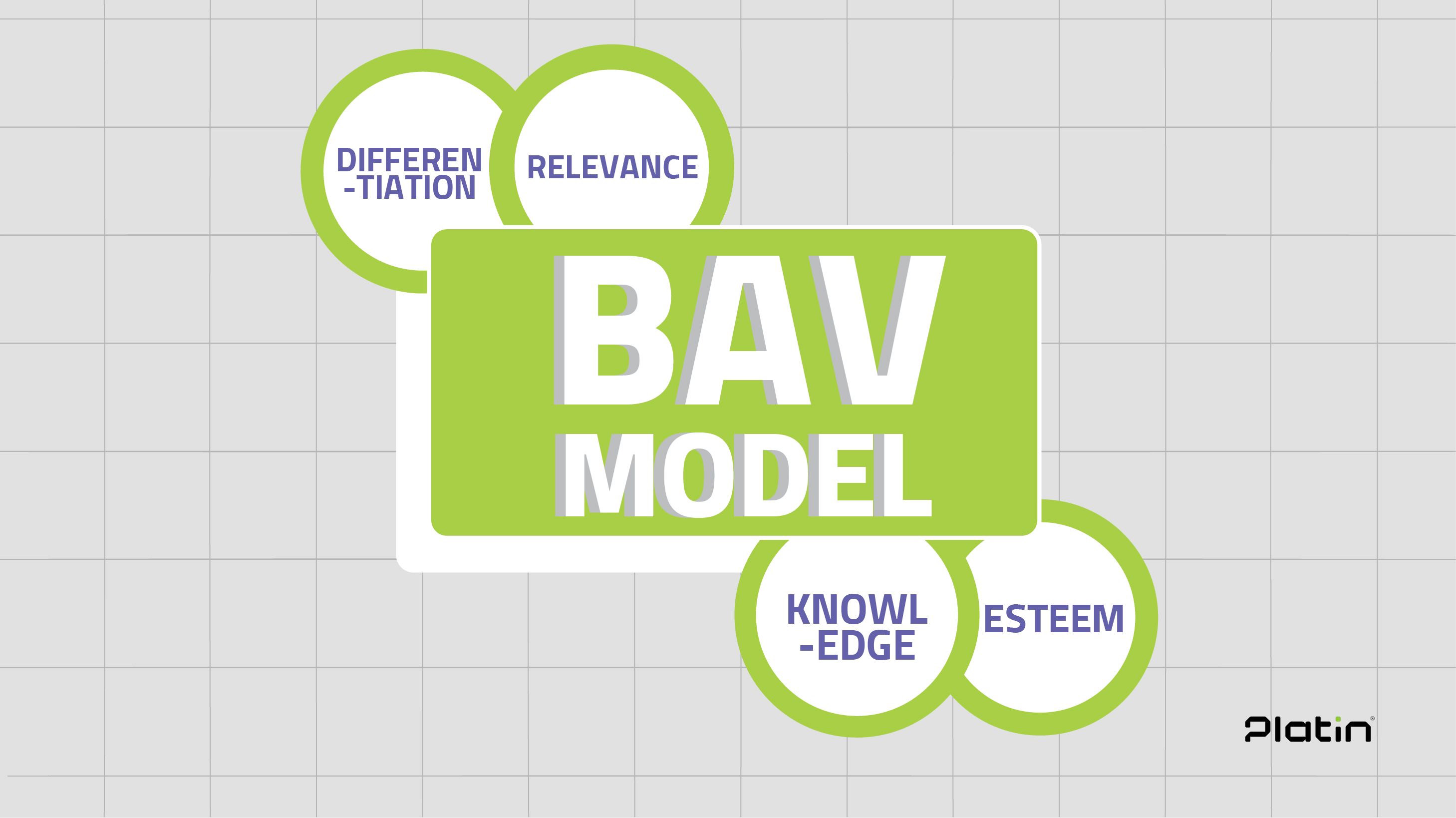
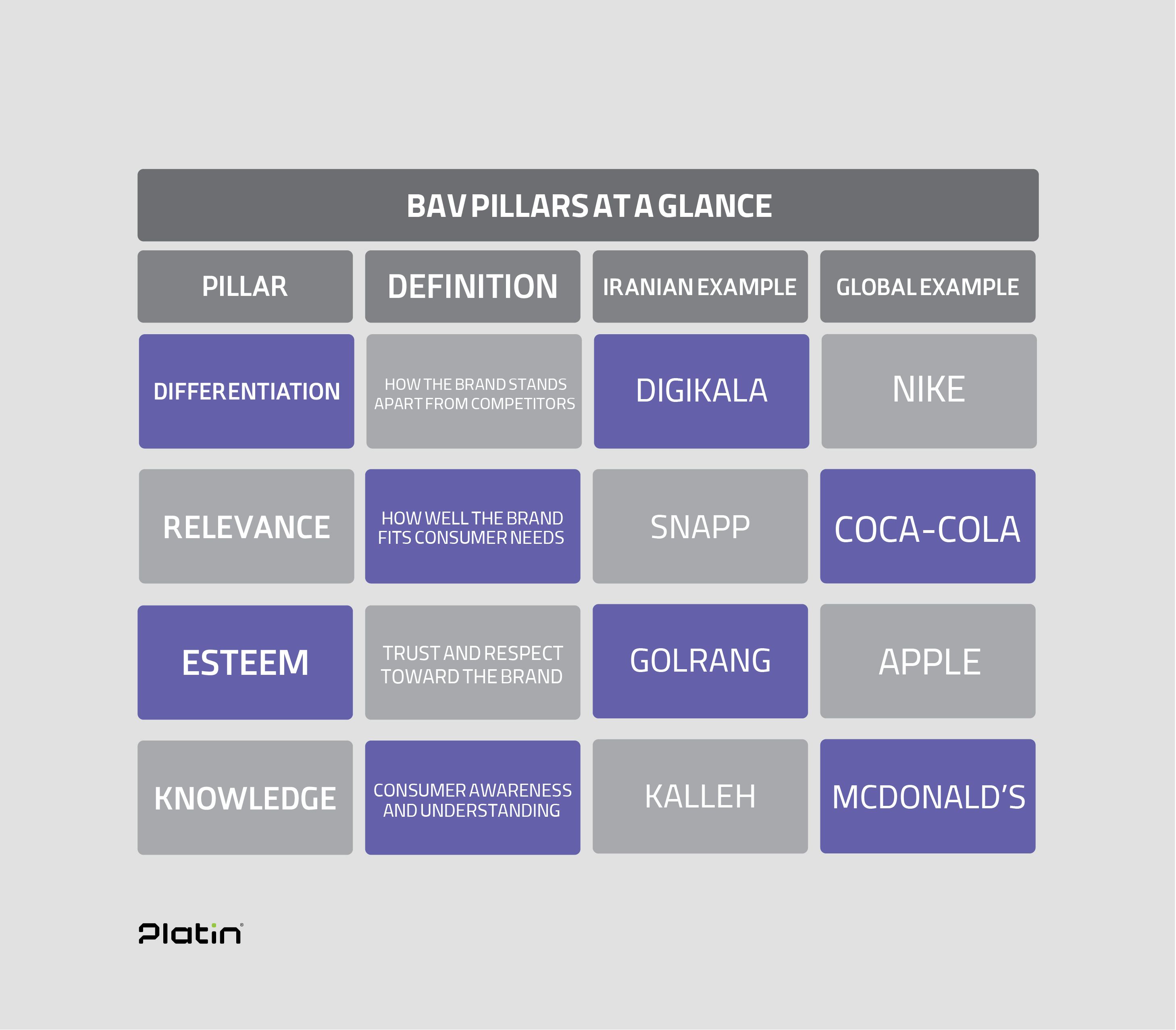
Differentiation measures how distinct a brand is in the market. It is the core engine behind brand strength and the first step toward capturing consumer attention.
Examples:
Relevance evaluates how well a brand aligns with real customer needs—and how meaningful it is in everyday life.
Examples:
In Iran, Snapp builds high relevance by solving an essential daily need: fast, affordable transportation.

Esteem reflects the trust, respect, and perceived quality consumers associate with a brand. It demonstrates the brand’s emotional value and social standing.
Example:

Knowledge refers to how well consumers understand a brand—its identity, promises, and history.
Examples:
BAV is not just a measurement tool—it’s a strategic guide that helps shape marketing, brand building, and business decisions.
For new brands, understanding their initial position is essential. BAV reveals whether a brand should first build differentiation or establish trust—making market entry more targeted and effective.
Sustainable loyalty is built when a brand scores high in both relevance and esteem. BAV helps identify weak areas and guides the design of customer clubs, retention programs, or experiential campaigns.
In industries where distribution and franchising matter, BAV insights on knowledge and esteem help create consistent customer experiences across all touchpoints.
Brands that neglect BAV often face issues such as:
– unclear positioning
– ineffective advertising spend
– weak differentiation
– poor loyalty strategy
– and fragmented brand experience
At Platin Communications & Marketing, we use the BAV framework to help brands accurately understand their market position and shape a data-driven growth strategy.
We begin by collecting accurate competitive data to identify where the brand currently stands and how it can build a stronger position.
Based on BAV insights, we develop a complete marketing strategy—from messaging and communication tone to selecting the right channels—ensuring higher impact and efficiency.

The BAV model is a powerful framework for understanding brand position and designing a clear path for growth. By examining four foundational pillars and key indicators, BAV helps managers build strategies rooted in real consumer insight and data.
If you’re looking to assess your market, design a market entry plan, or build loyalty programs, the team at Platin Communications & Marketing is ready to help you uncover your brand’s real value and guide its long-term growth through the BAV model.
