
Marketing Plan vs. Marketing Strategy

There is a strong and direct relationship between a marketing plan and a marketing strategy. Both are essential components of any successful business. From the perspective of professionals who provide brand strategy and marketing strategy services, using both elements is necessary for business growth and long-term success.
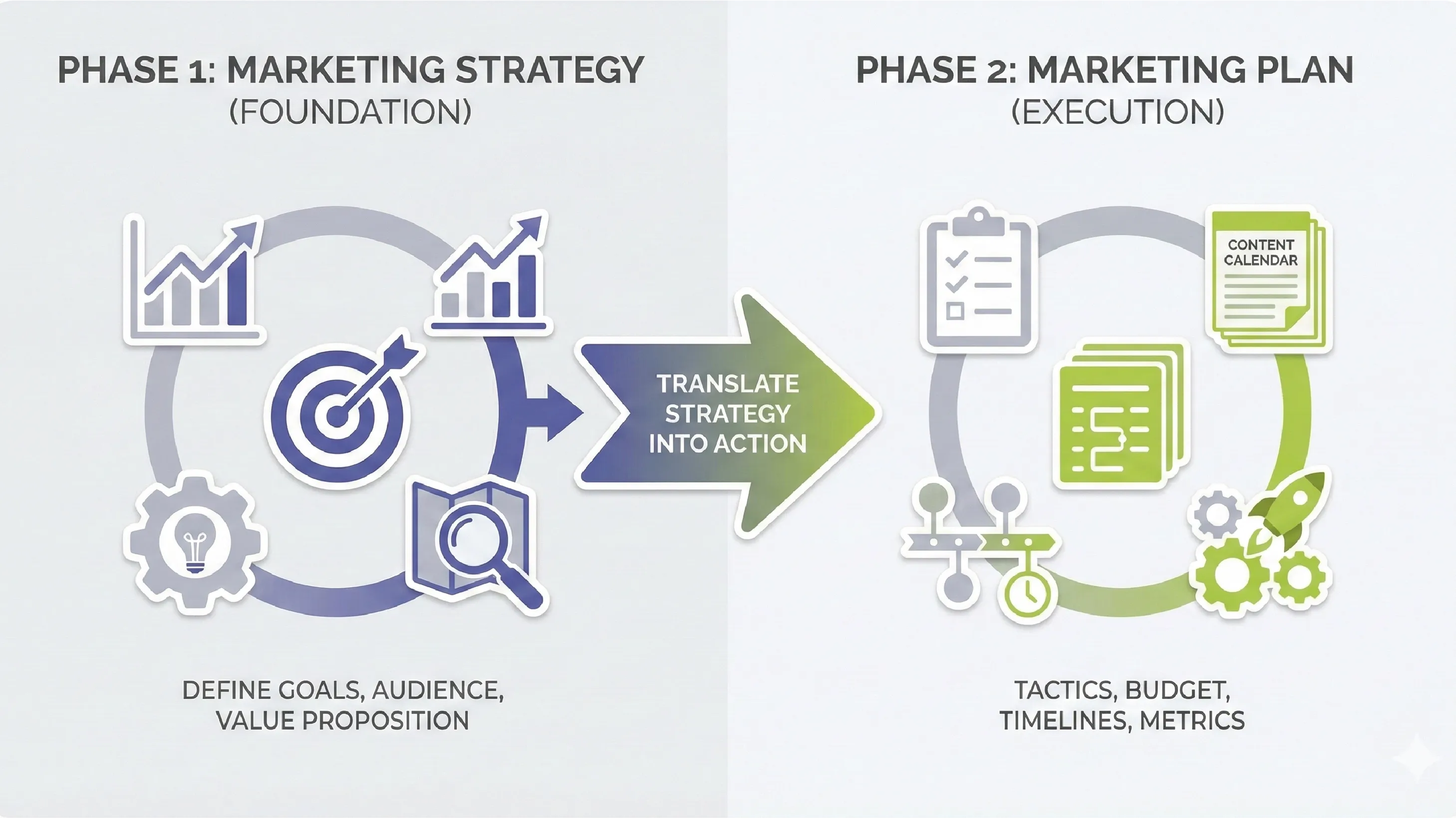
A marketing strategy forms the foundation of all the actions a business takes to communicate with its target audience. A marketing plan, however, defines the steps, processes, and activities required to achieve marketing goals and execute that strategy effectively. Some of the key differences between a marketing plan and a marketing strategy include the following:
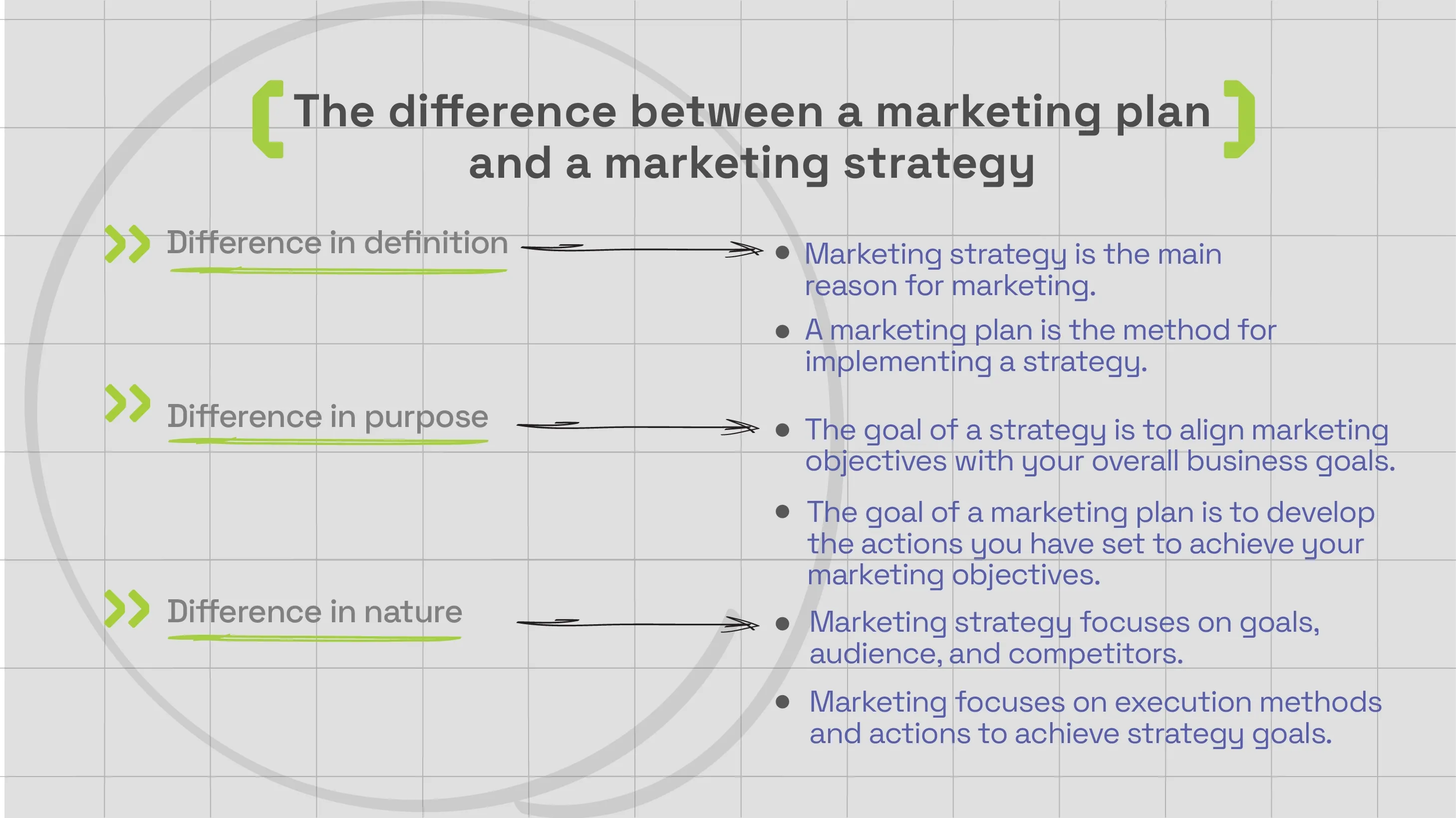
Difference in Definition
The main distinction between a marketing strategy and a marketing plan lies in the level of planning and execution. A marketing strategy defines the vision, long-term objectives, and the overall approach a business adopts to achieve a specific goal. A marketing plan then organizes and schedules a set of activities—such as branding initiatives, campaign execution, and promotional efforts—to help the brand move toward those goals more efficiently and effectively.
Difference in Goals
Another important difference between a marketing plan and a marketing strategy is their purpose. The goal of a marketing strategy is to align marketing objectives with the broader interests and direction of the business. In contrast, the goal of a marketing plan is to develop and manage the actions required to achieve the marketing objectives that have already been defined.
Difference in Nature
Marketing strategy focuses on high-level elements such as company goals, target audiences, communication methods, competitor analysis, and campaign objectives. A marketing plan, on the other hand, focuses on execution and implementation—defining the tactical actions and operational steps needed to achieve the goals outlined in the strategy.
A marketing plan typically includes one or more marketing strategies and allows each strategy to be connected to broader marketing operations and clearly defined objectives.
Example
For example, suppose your company’s goal is to launch a software product and encourage customers to register in order to purchase it. In this situation, the marketing team must create a marketing plan that supports proper product introduction and sales.
Launching a blog, producing content on YouTube, and creating a Twitter (X) account to discuss and engage audiences around the product are all actions that can be included in the marketing plan to attract and convert potential customers.
Benefits of Using Marketing Plans and Marketing Strategies
Although implementing marketing plans and strategies can be detailed and, at times, challenging, they offer significant advantages over competitors. Some of the key benefits include:
Identifying New Opportunities
Having clear, measurable objectives allows businesses to evaluate new market opportunities and quickly determine whether they represent the right move for the company.
Before executing a new initiative, businesses can also assess whether the opportunity aligns with their marketing plan and marketing strategy, and whether it can realistically meet their business needs.
Measuring Progress
A well-defined marketing strategy and marketing plan make it possible to measure business progress toward both short-term and long-term goals. In addition, companies can revisit previous objectives and develop new approaches to achieving their marketing targets based on performance insights.
Greater Business Alignment
When business leaders share the marketing strategy and marketing plan across the organization, employees gain a clear understanding of the campaign direction and their individual responsibilities. This alignment helps teams coordinate their efforts more effectively and contributes to stronger teamwork, creativity, productivity, and overall efficiency.
Collecting Valuable Data
An essential part of developing a marketing strategy is conducting research aligned with business goals. This research provides access to valuable data that can be used to design campaigns and craft more effective advertising messages.
Market research and data collection also help businesses strengthen their relationships with customers, which plays a critical role in long-term success.
Marketing Strategy vs. Marketing Plan
Now that the difference between a marketing plan and a marketing strategy is clear, an important question arises: which one does your business need to succeed?
Regardless of your objectives, you need both a strong strategy and a precise plan to achieve them. A business becomes truly successful when its marketing plan is fully aligned with and supports its marketing strategy.
When to Focus on Marketing Strategy
A strong marketing strategy is essential for businesses that are in the early stages of growth. By clearly defining the target market and competitive advantages, an effective strategy establishes the foundation for sustainable business development.
When to Prioritize a Marketing Plan
After a clear and well-structured marketing strategy has been developed, creating an appropriate marketing plan becomes critically important. A marketing plan is essential for turning strategic goals into action and ensuring the effective execution of marketing activities.
Marketing planning professionals recommend that businesses seeking to run specific campaigns or achieve short-term results must have a marketing plan in place in order to implement effective customer acquisition actions.
Conclusion
Marketing plans and marketing strategies are two key drivers of business success. Together, they help create organizational alignment, support the collection of valuable data, and contribute to the development and achievement of marketing goals.
A marketing strategy forms the foundation of all actions taken to achieve business objectives and is developed at the beginning of the process. In the next step, the marketing plan defines how everything outlined in the strategy will be executed. Therefore, companies seeking fundamental transformation and sustainable growth must not only develop a strong marketing strategy, but also create an effective marketing plan to bring those goals to life.
FAQs
What is the difference between a marketing plan and a marketing strategy?
A marketing strategy defines the core approach and objectives for reaching a target market and achieving competitive advantage, while a marketing plan includes all the actions taken to execute that strategy and achieve business goals.
Why is it necessary to have both a marketing plan and a marketing strategy?
Having both allows businesses to evaluate market opportunities, measure progress accurately, maintain organizational alignment, and gain access to valuable data.
When should a marketing plan be prioritized?
Once a marketing strategy has been established, developing a detailed and well-structured marketing plan becomes essential for achieving strategic goals and ensuring proper execution of marketing activities.
What does a marketing strategy primarily focus on?
Marketing strategy focuses on company objectives, campaign goals, identifying and analyzing target audiences, competitor analysis, and defining strategic frameworks.
