

In many businesses, products or services are technically excellent, yet sales or audience engagement do not happen effectively. This issue becomes particularly noticeable when two brands with similar quality achieve completely different results in a competitive market. Why does a product with the same quality sell significantly more? In many cases, the answer lies in how the product is presented and how the message is conveyed.
In a world where brands compete daily with thousands of advertising messages, if the real value of a product cannot be communicated in the language of the audience, even the best products are ignored. Focusing solely on technical features is not enough; the audience wants to know what difference these features make in their life or experience. This is where “differentiation from competitors,” “building trust,” and “enhancing customer experience” become vital factors in marketing communications.
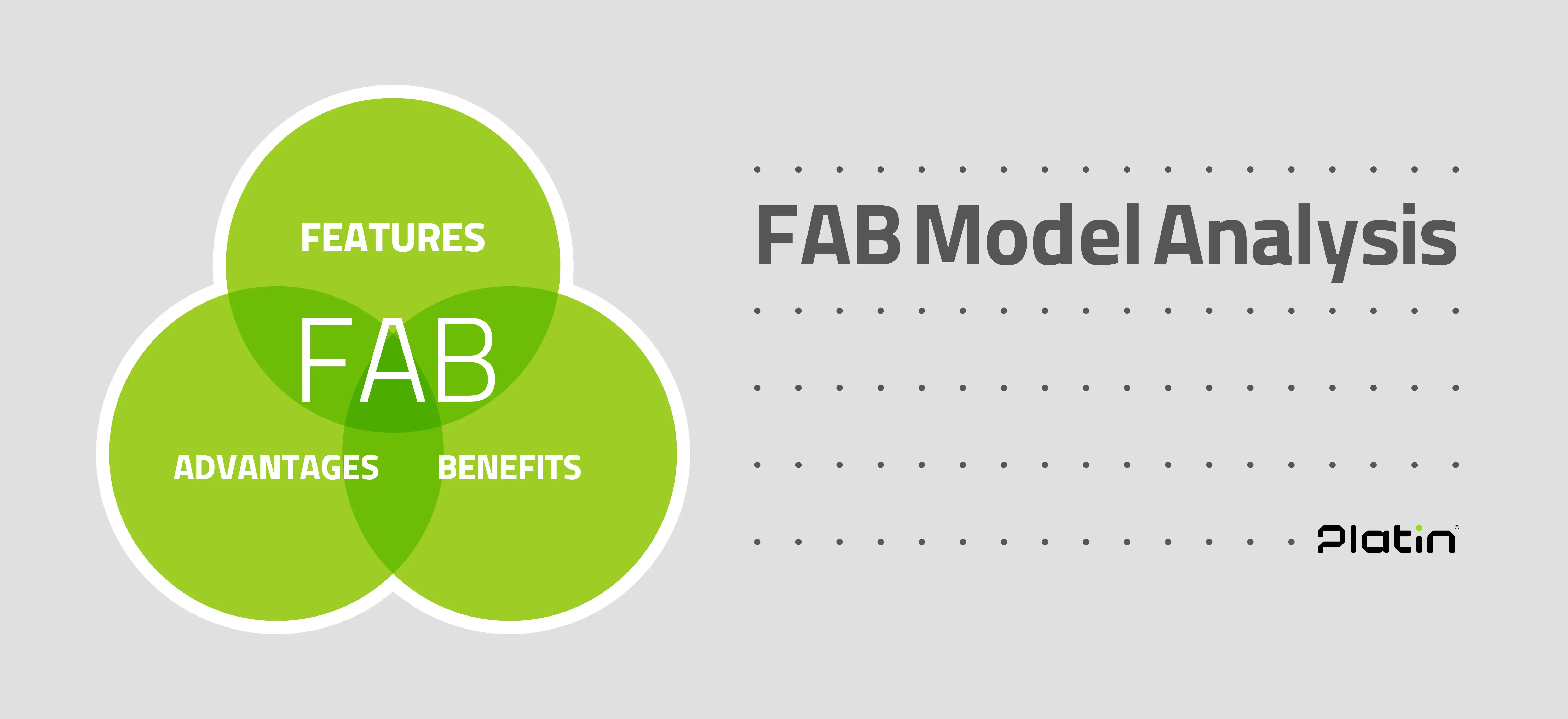
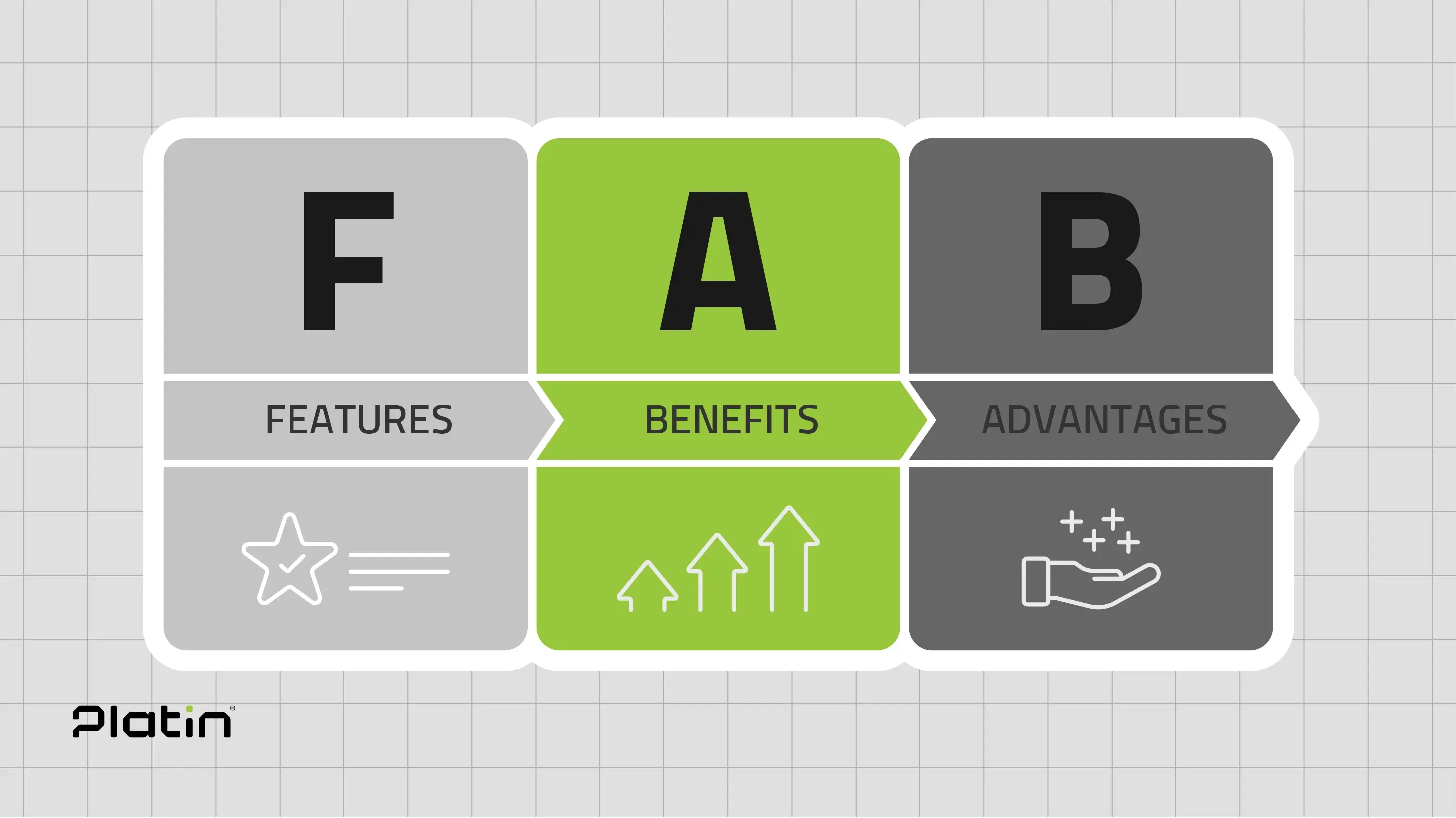
Here, the FAB model—short for Features, Advantages, and Benefits—emerges as a key tool in modern marketing. This model helps businesses shift from an inward-focused perspective to a customer-centric approach; instead of saying “what we have,” it explains “what this means for you.” Such a shift not only increases sales but also fosters trust and builds a deeper, long-term connection with the customer.
For example, saying “This product has a 5000mAh lithium battery” may be useful for some, but saying “With this battery, you can use your phone for a full day without recharging” connects the message to the audience’s everyday experience. This is where trust forms, differentiation occurs, and the likelihood of purchase increases.
Although the FAB model may seem simple at first glance, in practice, it provides a structured, flexible, and persuasive framework for crafting marketing and sales messages—messages that not only inform but also influence, build trust, enhance customer experience, and help the brand stand out in the mind of the audience.
The FAB model consists of three components, each forming the foundation for the next. These three components are:
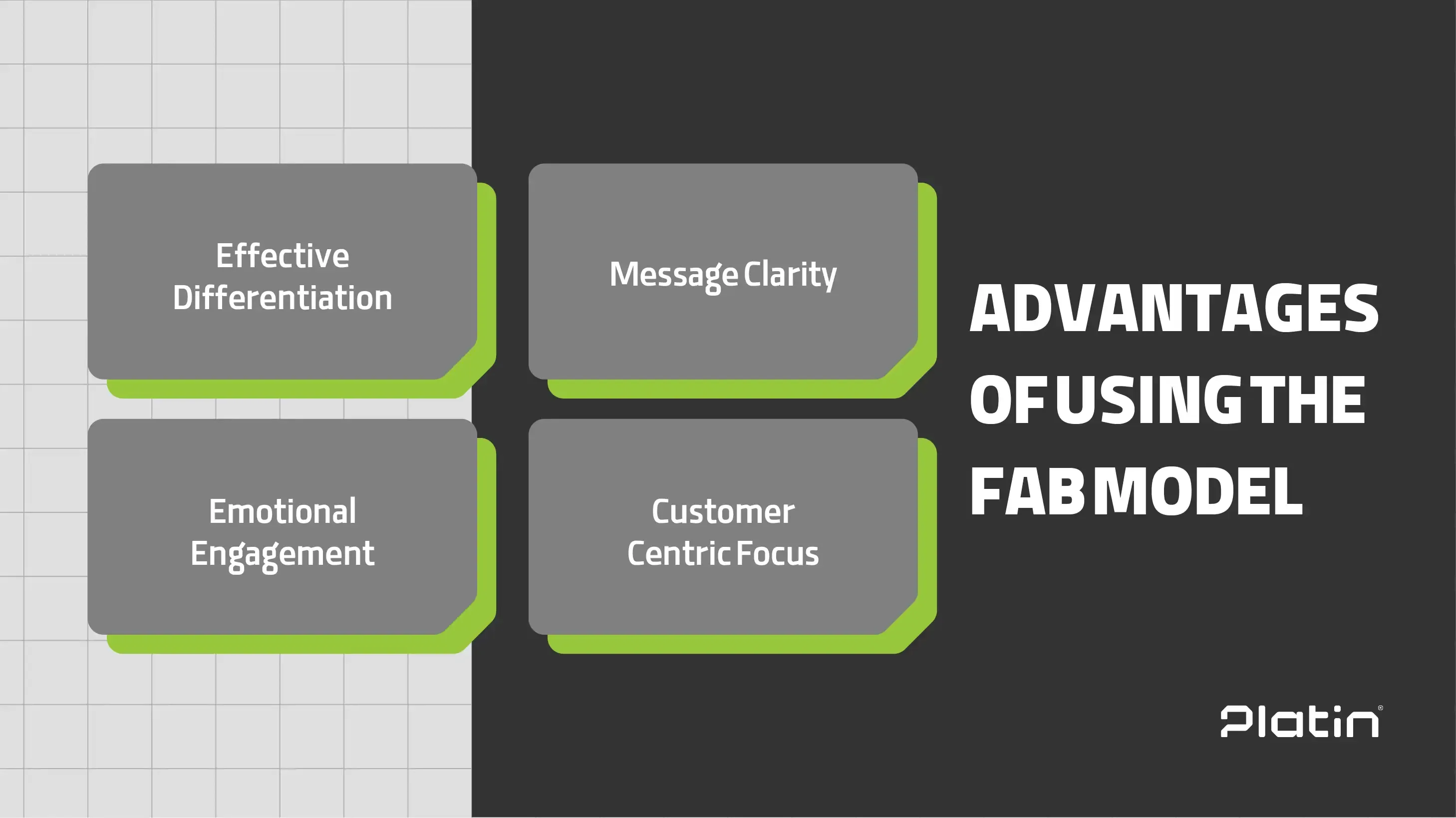
Today’s customers are faced with a large volume of advertising messages and marketing promises. In this context, only brands that can deliver their message clearly, persuasively, and aligned with audience needs will succeed. Using the FAB model allows brands to move beyond merely describing features and focus on demonstrating the real value of the product to the audience. This model enables brands to differentiate themselves from competitors, capture audience attention, and guide them toward desire and decision-making. In other words, the FAB model serves as a bridge between product language and customer mindset, facilitating trust and loyalty.
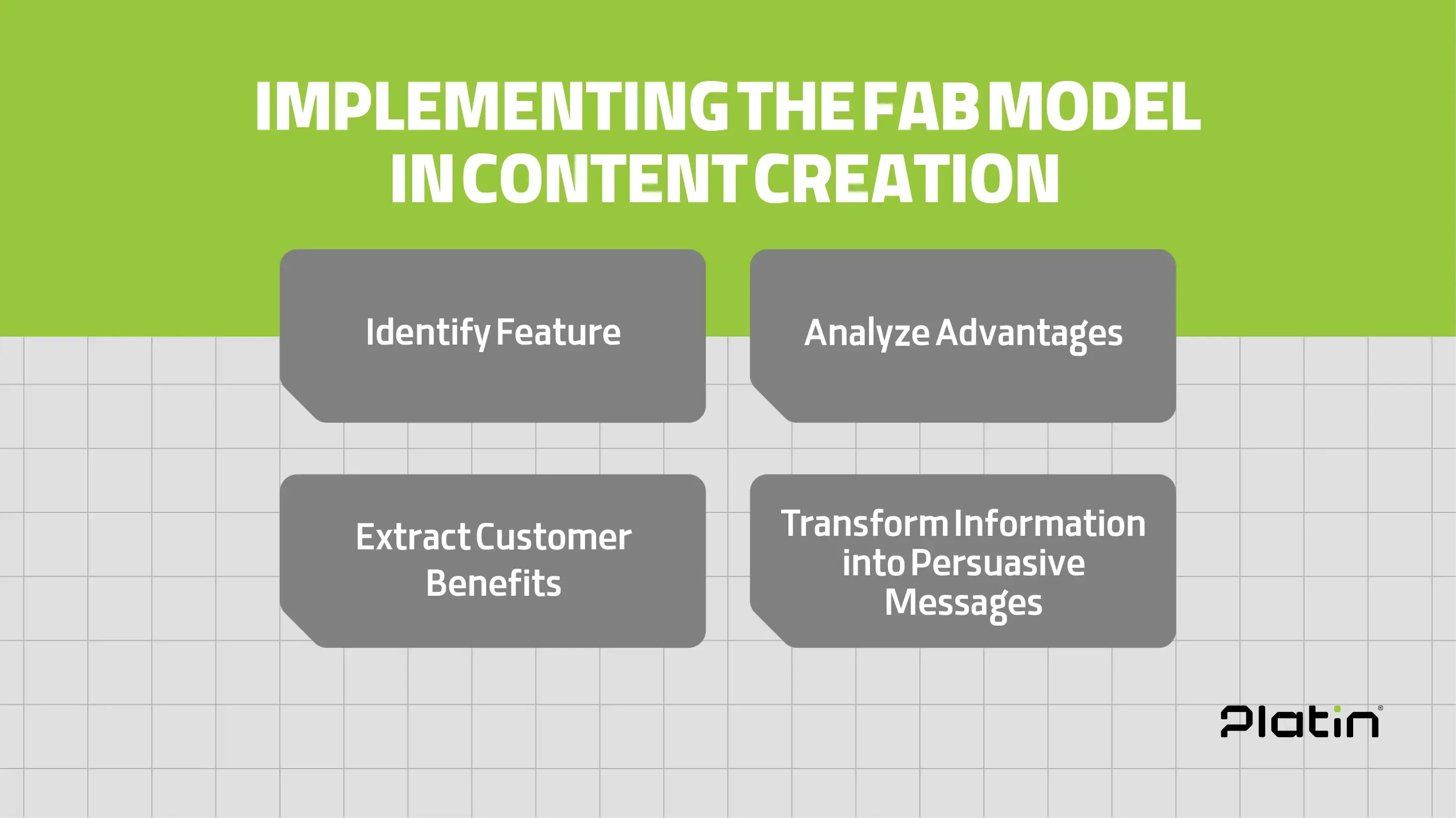
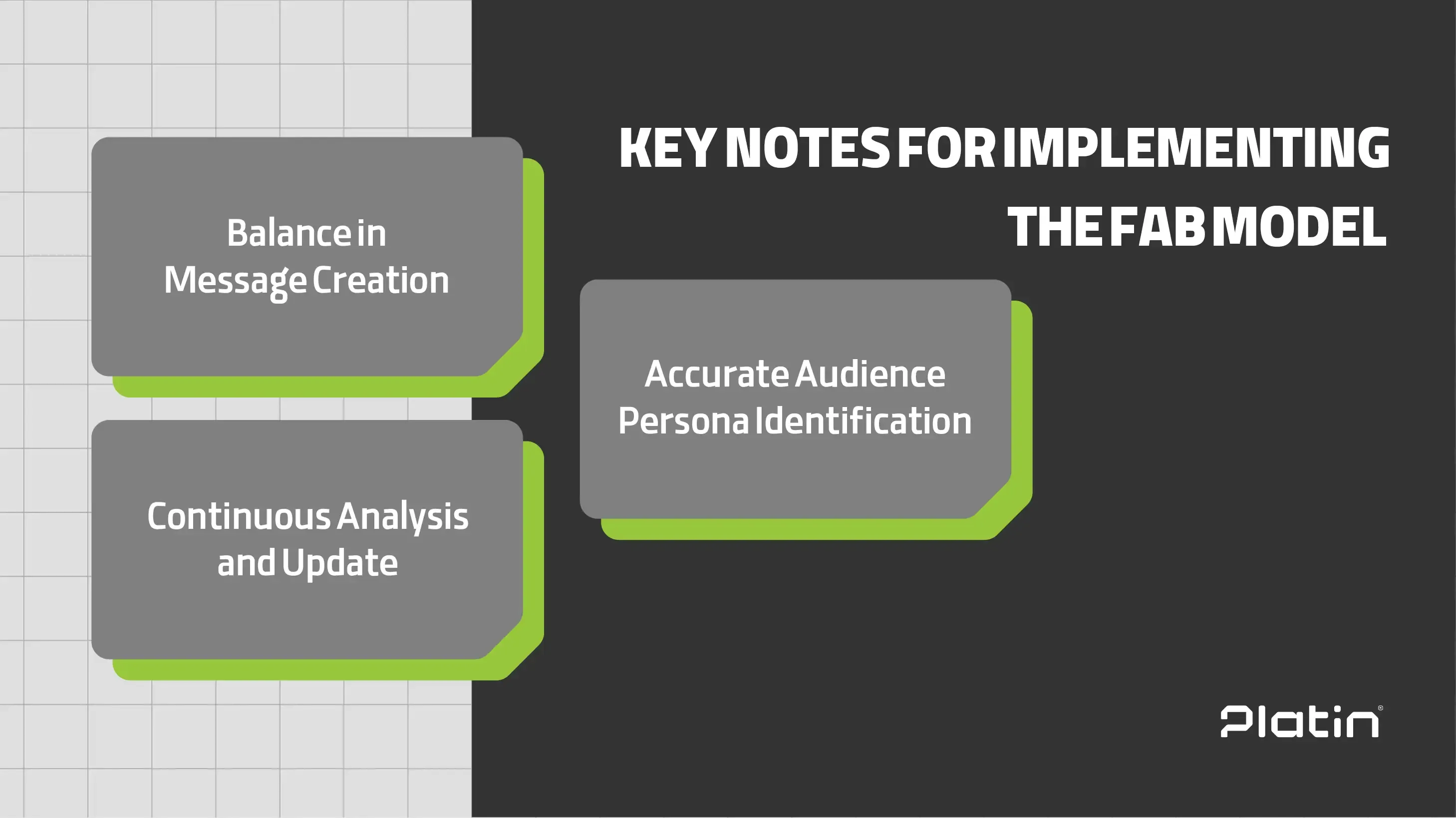
To use this model effectively in content marketing, the following steps can be followed:
Accurate Audience Persona Identification:
To define benefits accurately, you must know your target audience well. Their needs, concerns, and priorities should guide message design, ultimately improving customer experience and differentiating from competitors.
Balance in Message Creation:
Design messages according to each audience segment, as analyzing separate audience personas increases message precision. At the same time, focus only on the most important and impactful features to keep the message simple, clear, and credible.
Continuous Analysis and Update:
For successful execution, analyze data to identify impactful features, continuously engage with customers to align message language with their perception, and regularly review methods of applying the model. This process fosters trust, increases sales, and enhances customer loyalty over time.
Initially developed in direct sales, the FAB model has evolved into a standard and effective framework in marketing. Research analyses and innovative examples published between 2023 and 2025 highlight the increasing importance of this model in marketing and sales strategies.
Technology Industry:
For marketing a laptop, saying “Equipped with a 1TB NVMe SSD” is a feature. The advantage is much faster program loading and data transfer. The ultimate benefit for the customer is time-saving, higher productivity, improved user experience, and increased satisfaction, leading to higher sales.
Healthcare Services:
In promoting a specialized dermatology clinic, a feature could be “Using FDA-approved laser devices.” Its advantage is higher effectiveness and less pain. The ultimate benefit for the patient is greater confidence, comfort during treatment, and long-term trust.
Tourism Industry:
A travel agency might say “Offering special tours with Persian-speaking local guides.” This is a feature. Its advantage is better destination understanding and a sense of ease. The ultimate benefit for the customer is a deeper, stress-free travel experience, which can lead to differentiation from competitors and repeat business.
To better understand how to use the FAB model in marketing messages, reviewing a globally recognized product can provide a clear mental framework. The product examined here is the Dyson V15 Detect cordless vacuum, which leverages advanced technologies and serves as a suitable example for applying this model in marketing.
Example message:
“With the Dyson V15 Detect, clean even the dust you can’t see. Enjoy a healthier, calmer home without the need for constant recharging.”
The FAB model is often compared to frameworks like AIDA or USP. While AIDA focuses on the psychological journey of decision-making and USP emphasizes differentiation from competitors, FAB focuses on how product value is communicated. It ensures that the message persuades and influences the audience, fostering trust, increasing sales, and creating a lasting emotional connection. Combining these models in campaign design can yield highly effective results.
Ultimately, the FAB model is one of the most effective tools to shift from an inward-focused view to a customer-centric approach. It enables marketing managers to move from merely presenting features to highlighting real benefits—where the customer’s final decision is shaped, and trust begins. FAB creates a common language between brand and audience, shifting focus from “what we have” to the crucial question: “What impact does this product have on your life?” With this perspective, messages are no longer purely descriptive but tied to customer needs, desires, and emotions. This leads to differentiation from competitors, improved customer experience, and increased sales. By applying the FAB model correctly in marketing messages, products come to life, messages become tangible and persuasive, and customer experience reaches a higher level. The result is a human, emotional, and lasting connection between brand and audience—beyond purchases, fostering loyalty and long-term trust.
Before publishing any marketing content (ad copy, product introduction, video, social media post), ask yourself these five simple questions:
In today’s saturated market, simply stating “what you have” is not enough; you must show the audience “why it matters to them.” Platin Communications and Marketing Agency, with expertise in customer-centric content creation, helps you redesign your marketing messages using the FAB framework—so the audience not only understands your product but wants to buy it. If you seek greater trust, higher sales, and a brand that stands out in your audience’s mind, contact us today.
This article is based on:
