

In this article, we first emphasize the importance of value-based marketing and explore methods for providing value-added services and creating Direct-to-Consumer (DTC) sales channels. Next, tactics for eliminating unnecessary features, offering smaller packaging, and smartly diversifying the product portfolio are introduced. Additionally, the strategy of Product Bundling, including pure, mixed, gift, and seasonal bundling, as well as joint marketing to reduce advertising costs, will be discussed.
By reading this content, you will become familiar with key terms such as "value-based marketing," "DTC," "eliminating unnecessary features," "smaller packaging," "Product Bundling," and "joint marketing." You will also gain practical, well-researched strategies to improve sales during difficult economic times.
As economic recessions, inflation, and rising living costs have altered consumer purchasing patterns worldwide, businesses face complex challenges in retaining customer loyalty and driving sales. According to published reports such as the Morning Consult report from September 2024, which revealed that consumers in lower and middle-income brackets reported cutting down on their spending, it is clear that the purchasing power of citizens in many countries is under pressure.
During this time, the importance of reassessing marketing strategies is heightened, and brands must be more sensitive to changing market behaviors. The categories of goods most affected by reduced household budgets need to engage in smarter connections with customers to survive. In this regard, eight effective strategies for maintaining customer relationships and boosting sales are suggested.

Due to financial constraints, customers prefer to spend their money on products that provide the most value. Therefore, it is essential to demonstrate that the brand’s product is worth the cost. Instead of focusing solely on product features, these features should be transformed into values that matter to customers, such as time-saving or improving quality of life. Understanding customer needs and challenges allows brands to offer solutions that create real value.
Brands should ask themselves: "What benefit does this feature provide to the customer?"
For example, if a brand offers "pasteurized milk enriched with Vitamin D," rather than just advertising "our milk contains Vitamin D," a message like "prevents osteoporosis" or "reduces healthcare costs in old age" would highlight the true value behind the Vitamin D feature.

Brands should provide services that help customers get the most out of their purchased products. According to an article published on VWO’s website, adding services like better support or free training can offer more value to customers, or by sending messages tailored to each customer’s needs, brands can build a more effective connection.
For instance, a pasta manufacturer could provide "simple and affordable pasta recipes" as a value-added service.

The price of many products increases due to passing through several intermediaries in wholesale and retail, and ultimately, this price hike is passed on to the end consumer. Therefore, brands should create Direct-to-Consumer (DTC) sales channels to eliminate intermediaries, as suggested by an article on VTEX's website.
For example, some cosmetic companies hire salespeople in large residential or office complexes to directly sell their products at more affordable prices.
Eliminating unnecessary features can reduce the product's total cost and, as a result, the selling price. To do this, brands need to evaluate the product's features and benefits, and remove those that customers find unnecessary. However, it’s essential that the price of the simplified version is significantly lower than the full version to make the customer feel it is a worthwhile purchase.
For instance, many airlines have eliminated certain services such as in-flight meals, carry-on luggage, and seat-back monitors, but in return, have halved ticket prices to make it attractive to customers.
Declining purchasing power, coupled with smaller families, has led to a decrease in product consumption. In such cases, brands should adapt by offering their products in smaller packaging and at a lower price.
For example, many snack manufacturers have reduced the weight of their product packaging and, as a result, lowered its price. It’s important to note that this strategy is different from the common tactic where the packaging weight is reduced, but the price remains the same or even increases. In this approach, customers notice the smaller packaging and the proportionate price reduction, which creates a sense of fairness and trust in the purchase.
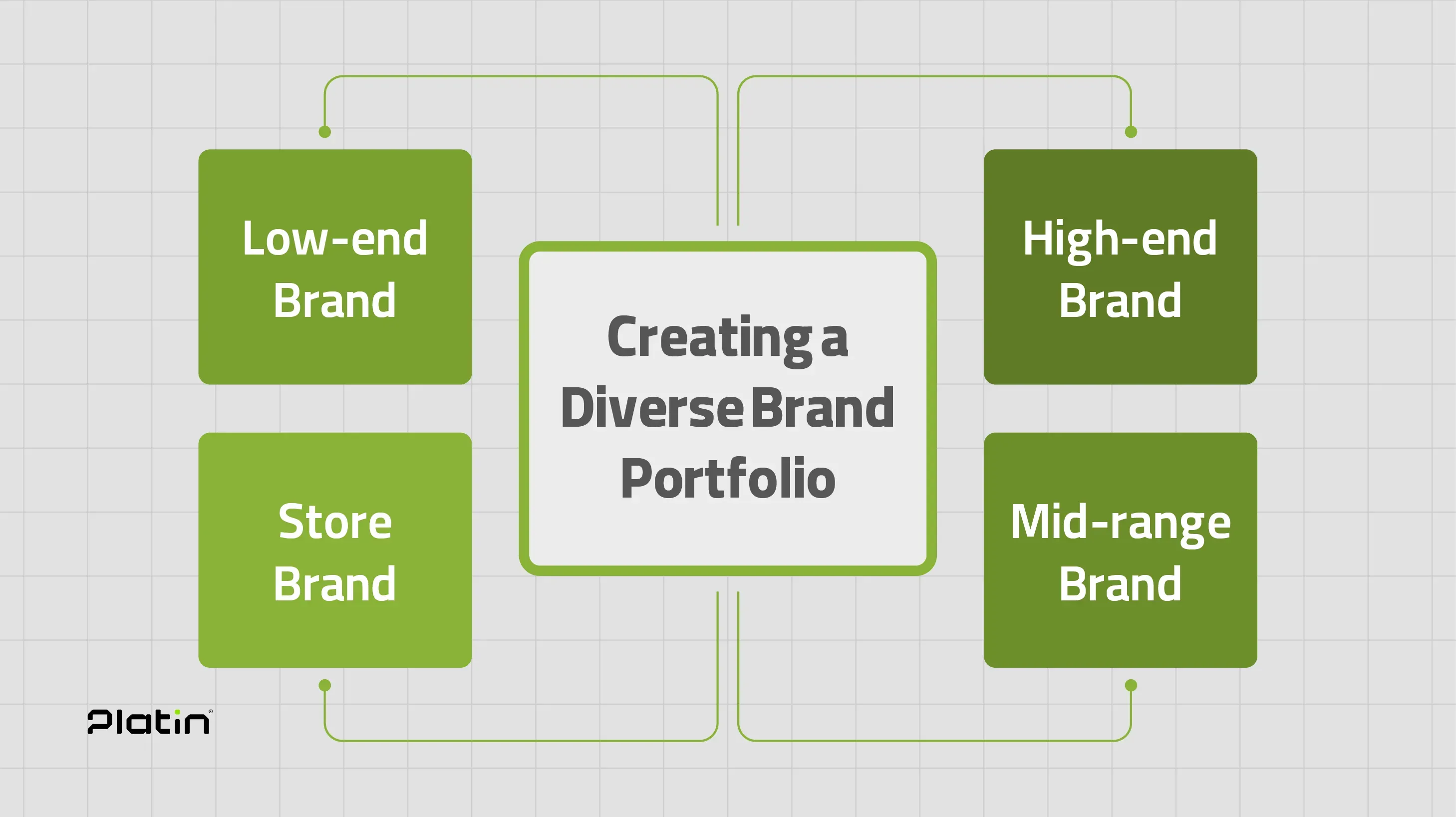
Companies should intelligently diversify their product portfolio to meet various customer needs. As mentioned in a Camphouse blog, offering products at different price and quality levels allows brands to cater to a broader customer base. Considering four distinct brand categories can help attract different consumer groups:
A Price Pack is a collection of products sold at a price lower than the total of the individual items. This strategy benefits both the company and customers because the company can bundle slow-selling items with bestsellers, and customers receive multiple products at a lower price.
For instance, a sauce manufacturer could bundle its bestselling and less popular sauces together at a lower price than the total price of each one separately.
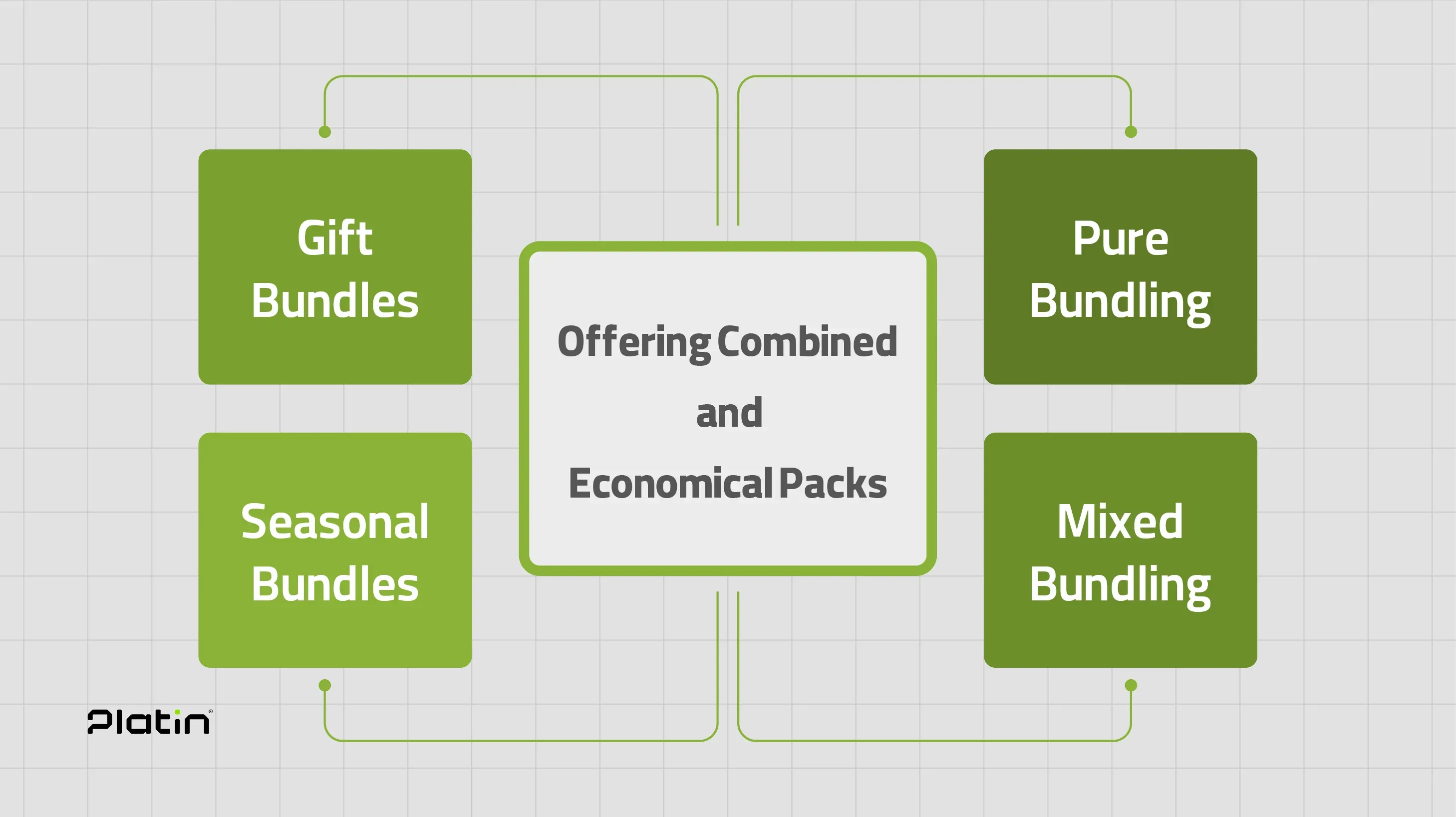
This strategic approach refers to Product Bundling, where multiple products are sold together, usually with a discount. As discussed in an article from Gelato, this strategy aims to increase the average order value (AOV), improve the shopping experience, and reduce marketing and distribution costs.
This method also includes various forms of bundling such as pure bundling, mixed bundling, gift bundles, and seasonal bundles, allowing businesses to create a package that fits their target market's preferences and strengthens customer loyalty.
Joint marketing refers to collaborating with other companies in advertising and branding to reduce marketing costs.
For instance, a company could share a billboard with a complementary brand. This not only cuts advertising expenses but also provides more room for offering discounts to customers.
During inflation, businesses offering products or services with high price elasticity are most affected. High price elasticity means that with price increases, demand significantly decreases. According to an article from Investopedia, luxury goods like jewelry, vacations, and advanced electronics fall into this category, as consumers delay or skip purchases due to rising prices.
Additionally, the availability of cheaper alternatives also affects demand. For example, in the clothing industry, consumers may opt for more affordable brands or shop at discount stores. Also, for non-essential services like beauty salons or gyms, price hikes may lead to a decline in customers.
Therefore, businesses that offer high price-elasticity products or services must reassess their marketing and pricing strategies during inflation. This could include offering competitively priced bundles, focusing on product value, and using direct-to-consumer sales channels to reduce the impact of inflation on demand.

Summary of Content
This article introduced eight key strategies to deal with declining consumer purchasing power:
By employing these strategies, brands can maintain or even expand their sales during times of inflation and recession.
Platinum Marketing and Communications Agency offers targeted marketing plans and the most effective strategies for marketing during economic recessions, helping you navigate these challenges.
Sources:
