

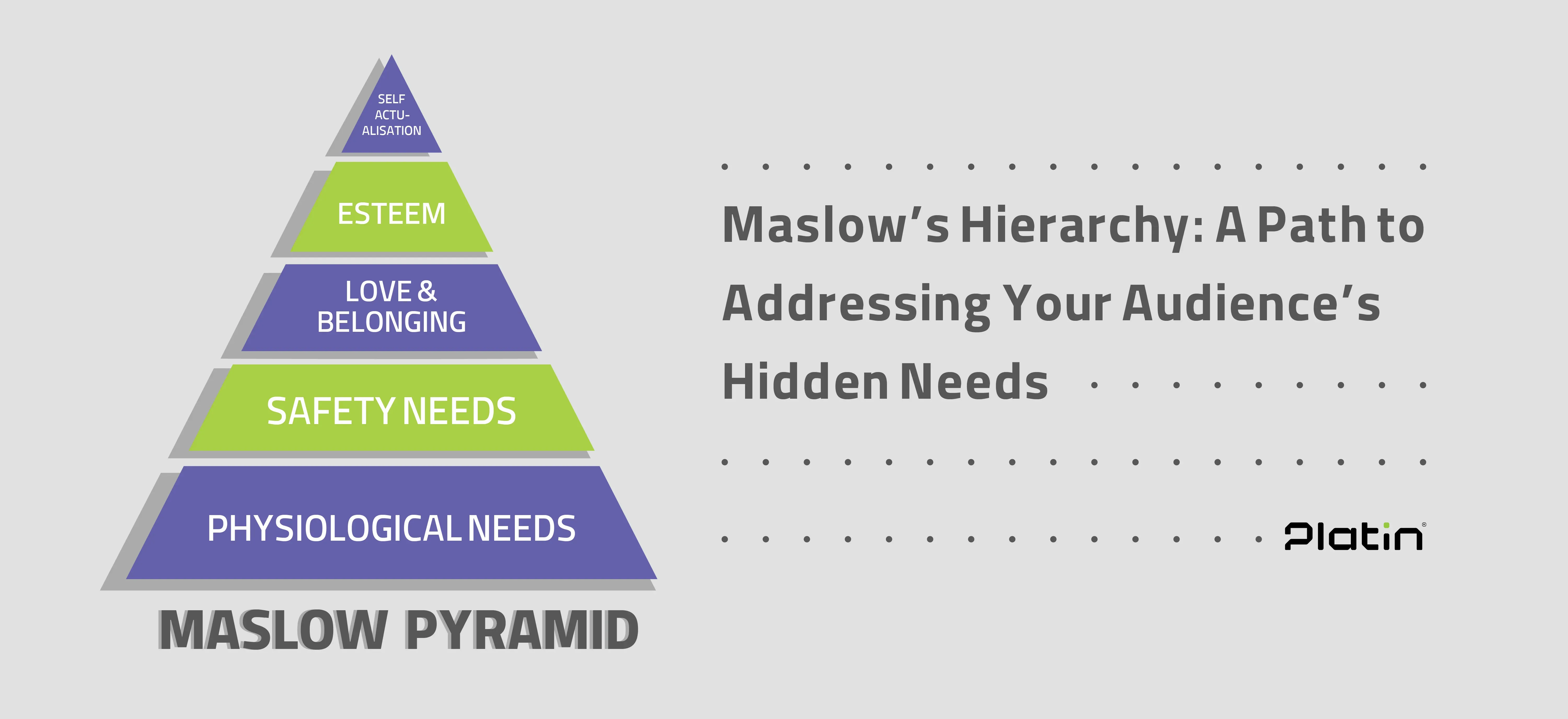
In today’s world, understanding your audience goes beyond age, gender, or geographic location. To build deep and lasting connections, brands must delve into the hidden layers of customer needs, motivations, and emotions. Maslow’s Hierarchy, a well-known psychological model of motivation, provides a clear roadmap for uncovering these needs—from basic necessities to long-term aspirations—helping brands foster loyalty and satisfaction. In this article, we explore, through the experience of Platin Marketing & Communications Agency, how Maslow’s Hierarchy can be applied in business modelling, customer loyalty programs, and go-to-market strategies.
Developed by American psychologist Abraham Maslow in the 1940s, Maslow’s Hierarchy is one of the foundational models for understanding human motivation. It is based on the principle that individuals strive to fulfil a hierarchy of needs, from basic physiological requirements to self-actualization.
In marketing, this framework helps us determine where the audience stands within the hierarchy and which messages will resonate most effectively.
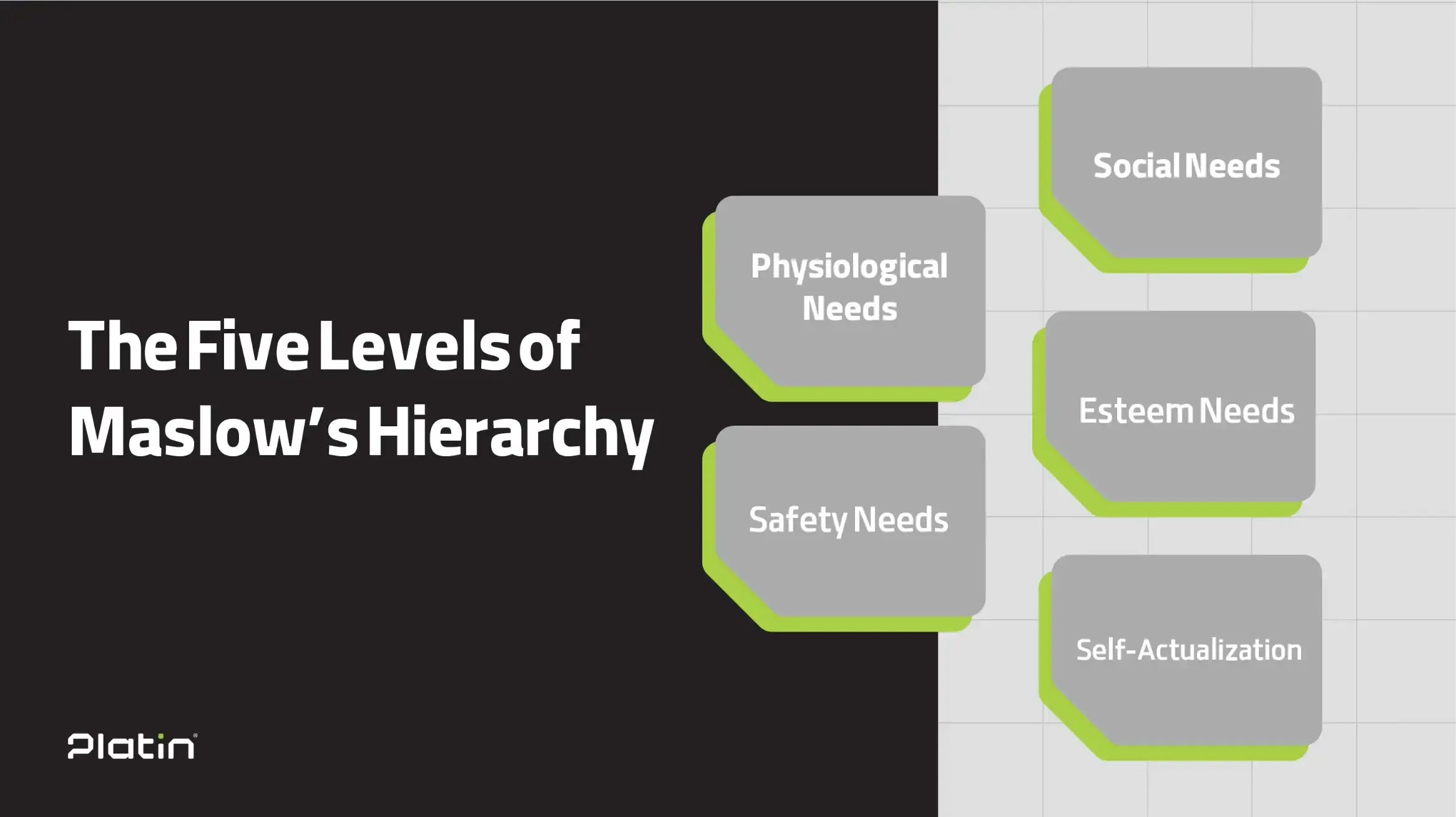
Modern marketing goes beyond product promotion; it’s about creating experiences that touch different layers of customer needs. By understanding a customer’s position within Maslow’s Hierarchy, marketers can craft targeted messages and strategies that foster not just purchase but long-term loyalty.
Successful brands first ensure their products or services meet customers’ basic needs. They then build a sense of security, belonging, and esteem, guiding the customer toward a stage where the brand becomes part of their identity. Ultimately, this relationship reaches self-actualization, where the customer feels the brand helps them lead a better life.
Apple: Elevates customers to the highest level of the hierarchy by fostering creativity and social esteem.

Coca-Cola: Focuses on social connections and happiness, addressing social needs.
Insurance Companies: Provide financial security, targeting the second level of the hierarchy.
In the “Gloria: Magic of Cooking” campaign, Platin Marketing & Communications Agency carefully designed and executed the strategy strictly according to Maslow’s hierarchy of needs:
Successful marketing is rooted in understanding customers’ emotions, motivations, and hidden needs. Even unconsciously, many purchase decisions are driven by feelings rather than logic.
Maslow’s Hierarchy reveals how emotional needs—belonging, esteem, self-actualization—affect customer choices. For instance, buying a luxury car may serve not just practical needs but also social recognition and personal identity expression.

Creating an emotional bond ensures customers choose your brand not only for price or features but also for trust, empathy, and belonging. This bond is what drives loyalty.
A business model maps how value is created, delivered, and monetized. Integrating Maslow’s Hierarchy helps identify your product or service’s place in the customer’s mind and tailor marketing messages effectively.
Examples:
Loyalty goes beyond repeat purchases; it’s about maintaining customer interest and advocacy. Using Maslow’s Hierarchy ensures loyalty programs create valuable experiences, not just discounts.
Personalized communication and post-sale services reinforce customers’ sense of value, addressing the second and third hierarchy levels.
When customers experience respect, growth, and belonging, they not only repeat purchases but voluntarily act as brand ambassadors—the pinnacle of loyalty.
Entering a market without understanding customer needs is like navigating in the dark. Maslow’s Hierarchy provides a clear roadmap to align market entry strategies with customer priorities.
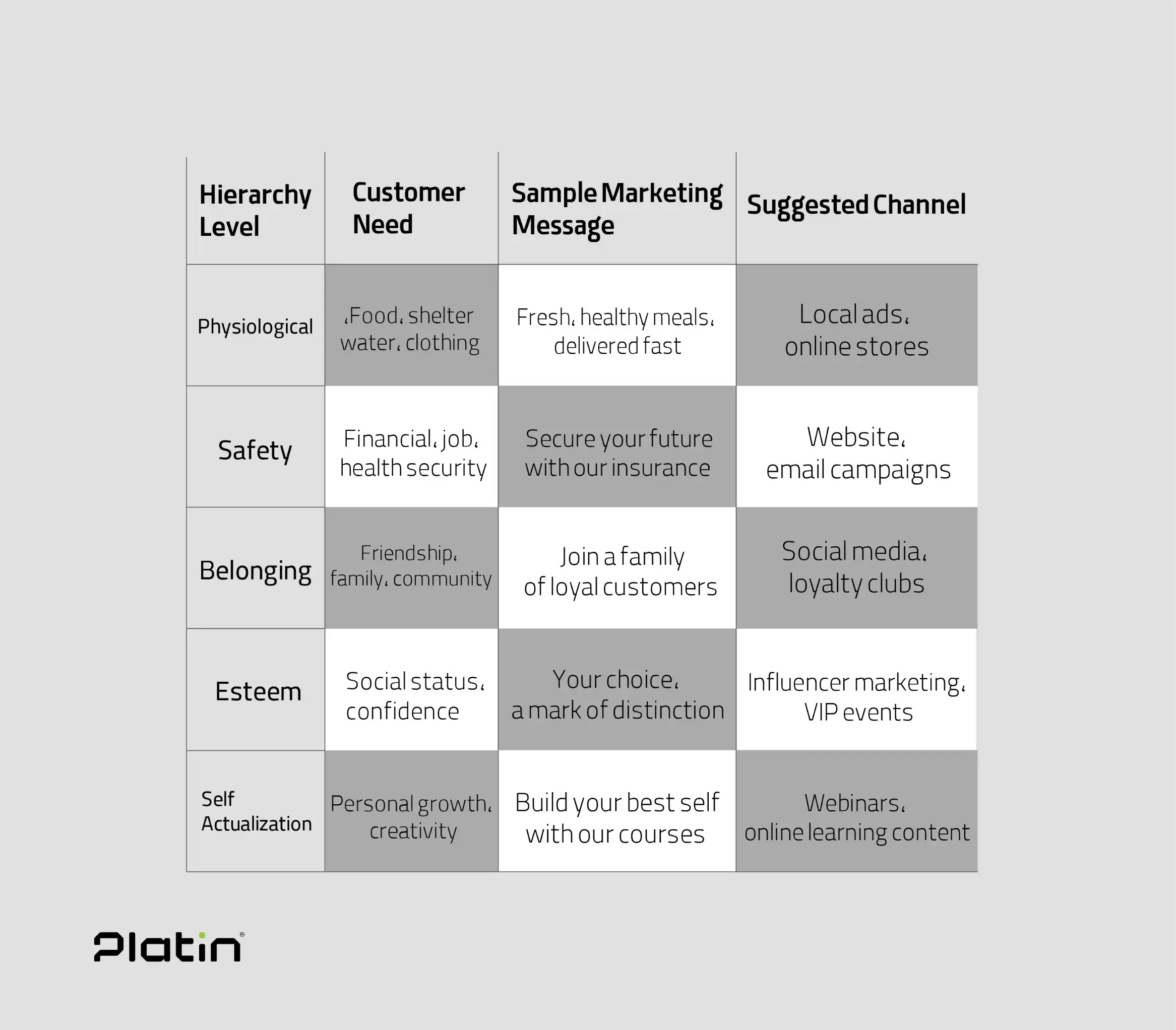
An effective marketing plan aligns messages and channels with the customer’s hierarchy level.
Emotional storytelling is powerful for esteem and self-actualization, activating feelings and turning customers into brand advocates.
At Platin, we combine psychological insights, Maslow’s Hierarchy, and practical experience to create strategies that drive real sales and sustainable branding.
If you want to uncover your customers’ hidden needs and leverage them for business growth, connect with us.
