
What Is Brand Positioning and Why Does It Matter?


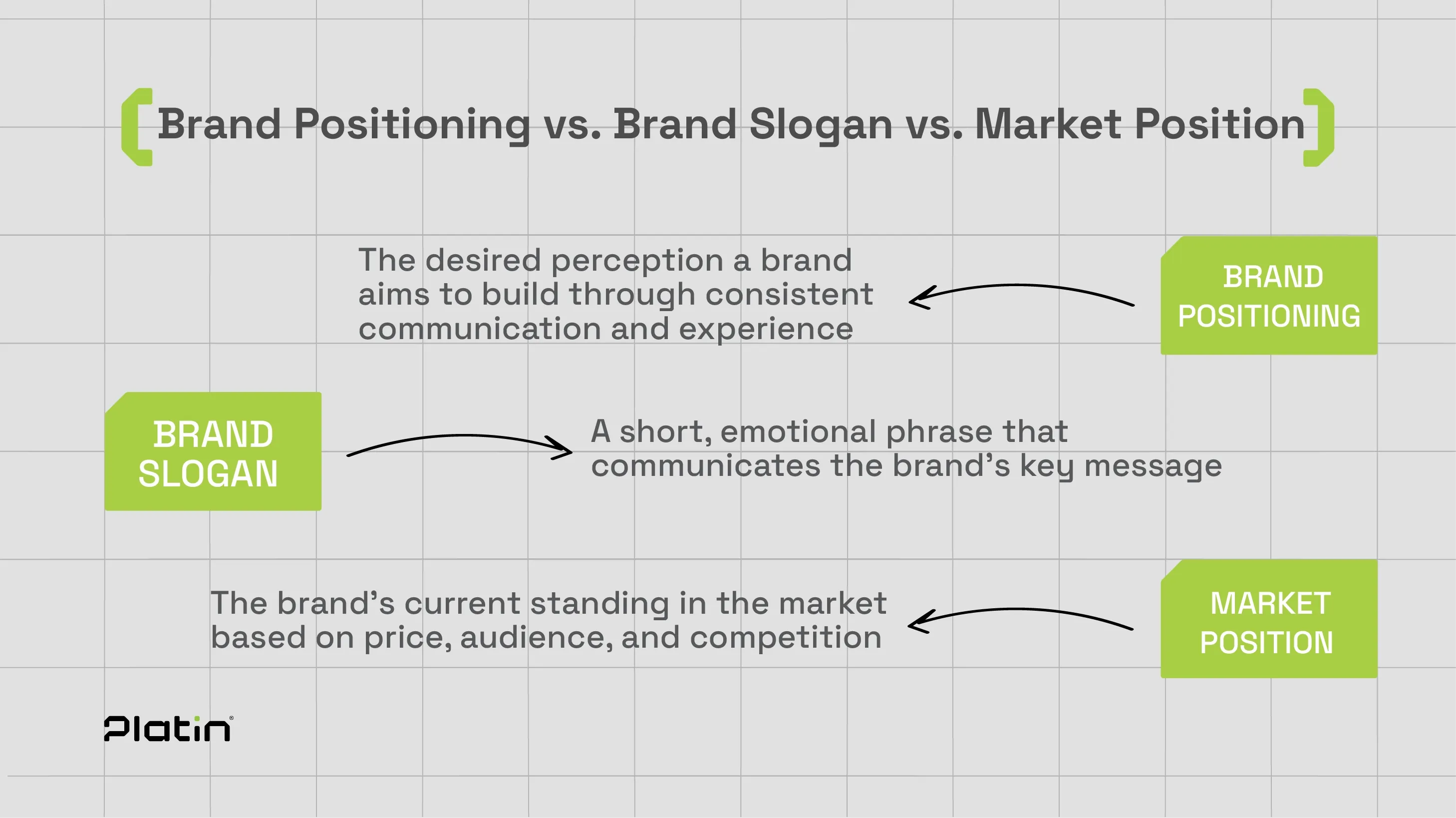
Brand positioning is the strategic effort to establish a clear, distinctive, and enduring perception of a brand in customers’ minds. It defines how the brand is evaluated against competitors and which associations — such as value, quality, innovation, pricing, and personality — shape that perception.
Positioning draws the line between being forgotten and being chosen. It enables brands to achieve relevance, differentiation, and long-term loyalty.
Brand Positioning vs. Brand Slogan vs. Market Position
The Primary Goal of Brand Positioning
The goal is to create a meaningful and defensible advantage that motivates customers to choose your brand over alternatives. When the unique value of a brand is clear, customers develop strong preference and emotional connection — leading to loyalty and repeat purchase.
Examples:
- A fashion brand might differentiate through natural materials and minimalist design.
- Another may focus on affordability and universal accessibility.
How Brand Positioning Is Developed
A robust positioning strategy typically includes the following steps:
- Assess the Current Perception
Gather insights through market research, analytics, and customer feedback. - Competitor and Market Analysis
Identify opportunities to stand out where competitors fall short. - Audience-Centric Definition
Position the brand for specific segments based on generation, lifestyle, or professional needs. - Clear Value Proposition
Define the promise that delivers consistent value — whether it’s quality, price, durability, or innovation. - Consistent Implementation Across Experiences
Ensure the positioning is reflected in all brand touchpoints to reinforce emotional preference.
How Brand Perception Is Formed
Brand perception is shaped over time through continuous interactions such as:
- Advertising and communication
- Product experience and performance
- Customer service and after-sales support
- Social proof and reputation
Strong positioning requires:
- Focused offerings
- Credible proof points
- Flexibility for future evolution

Why Brand Positioning Is Essential
In competitive markets, positioning drives:
- Customer trust
- Brand loyalty
- Higher conversion and preference
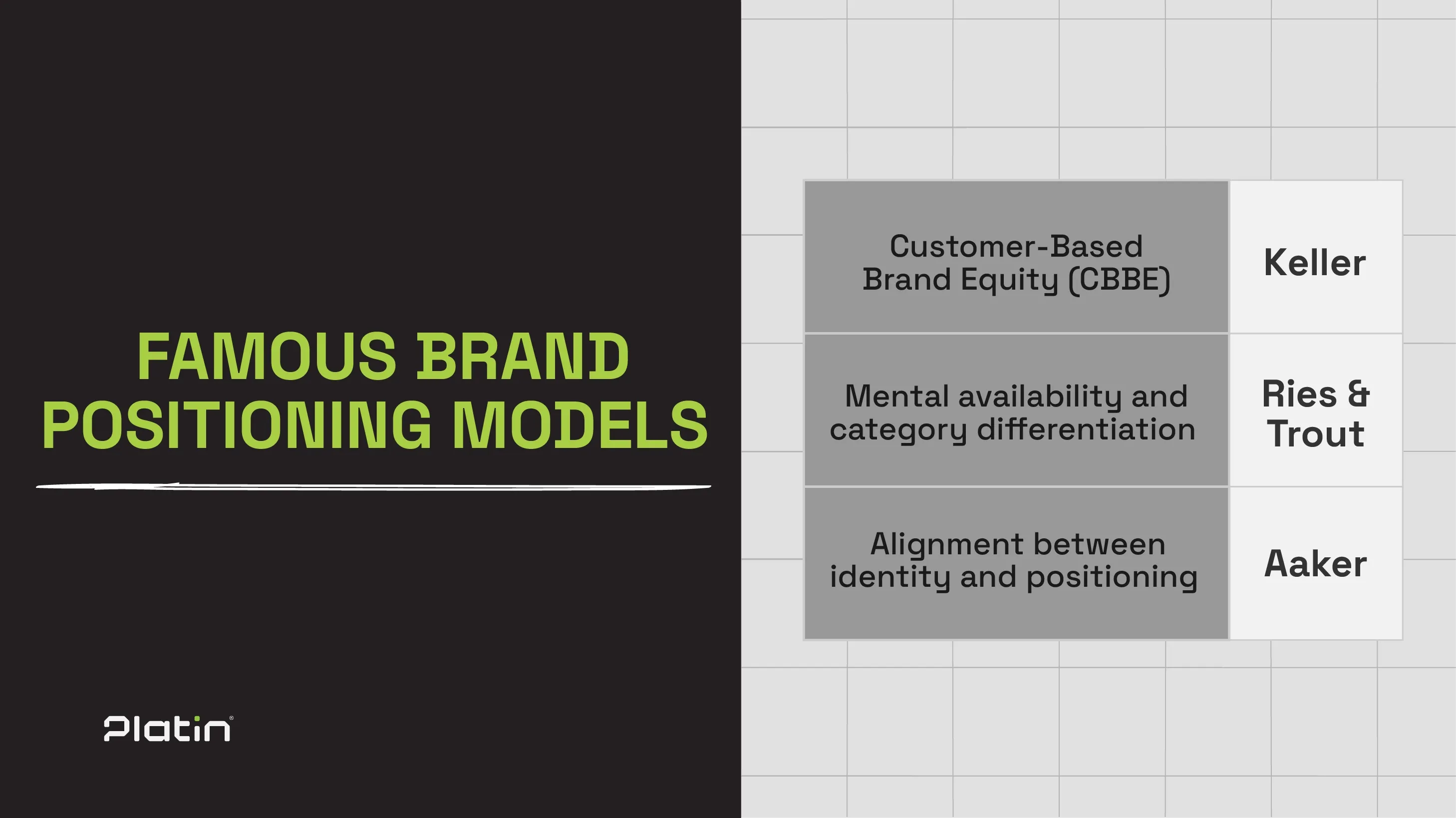
Leading strategy frameworks that support positioning include:
- Keller – Customer-Based Brand Equity (CBBE)
- Ries & Trout – Mental availability and category differentiation
- Aaker – Alignment between identity and positioning
Common Brand Positioning Mistakes
Mistake | Consequence |
Weak audience insight | Misaligned messaging |
Copying competitors | Loss of uniqueness |
Unsupported claims | Low credibility |
Inconsistent messaging | Poor recall and weak relevance |
No ongoing evaluation | Outdated positioning |
These issues reduce competitiveness and limit brand growth.
How Leading Brands Achieve Strong Positioning
Brand | Core Positioning |
Apple | Simplicity and innovation |
Nike | Personal empowerment and performance |
Tesla | Sustainability and premium technology |
Many top brands rely on strategic consultancy to refine and sustain their position.

Maintaining or Redefining Positioning Over Time
Positioning is dynamic. Brands must evolve with changing customer expectations and market trends while preserving their core identity. Any repositioning must be:
- Strategic
- Gradual
- Aligned across the organization
Continuous customer insight is central to staying relevant.
The Role of Communication and Customer Experience
Positioning succeeds when communication and delivery are fully aligned. Public relations and customer experience play essential roles in shaping both functional and emotional perception:
Key contributions include:
- Strengthening brand reputation
- Ensuring messaging alignment
- Safeguarding credibility in crises
- Gathering insights for optimization
- Storytelling for deeper connection
- Expanding brand community and advocacy
Conclusion
Brand positioning defines:
- Who the brand is
- How it is perceived
- Why it is chosen
True differentiation exists in the customer’s mind. Brands that invest in positioning improve relevance, trust, and preference — ultimately becoming the preferred choice rather than one more option.
Frequently Asked Questions
1. How is brand positioning different from brand identity?
Brand identity is how the brand presents itself. Positioning is how audiences interpret and internalize that presentation.
2. How does positioning influence sales?
A compelling, credible positioning increases purchase intent, trust, and long-term loyalty.
3. When should a brand consider repositioning?
When consumer needs shift, competition intensifies, or business strategy evolves.
4. What is the role of PR in positioning?
PR reinforces positioning through consistent communication, storytelling, and reputation management.
