
Who Will Speak for Your Brand?

A Deep Dive into Influencer Categories Based on Content
In today’s digital world where new content is produced every second, influence is no longer defined by follower count alone. The type of content an influencer creates — and how well their audience aligns with your brand values — plays a critical role in the success of marketing campaigns.
To ensure your brand’s voice stands out in a crowded digital space, you must collaborate with influencers who not only possess expertise in their field but also have an engaged community that resonates with your positioning.
In this article, we explore influencer categories based on content specialization, evaluate the advantages of each, and support you in choosing the right influencer considering your campaign goals, budget, and audience persona. If you are seeking a strategic and professional approach to influencer marketing, this guide is for you.
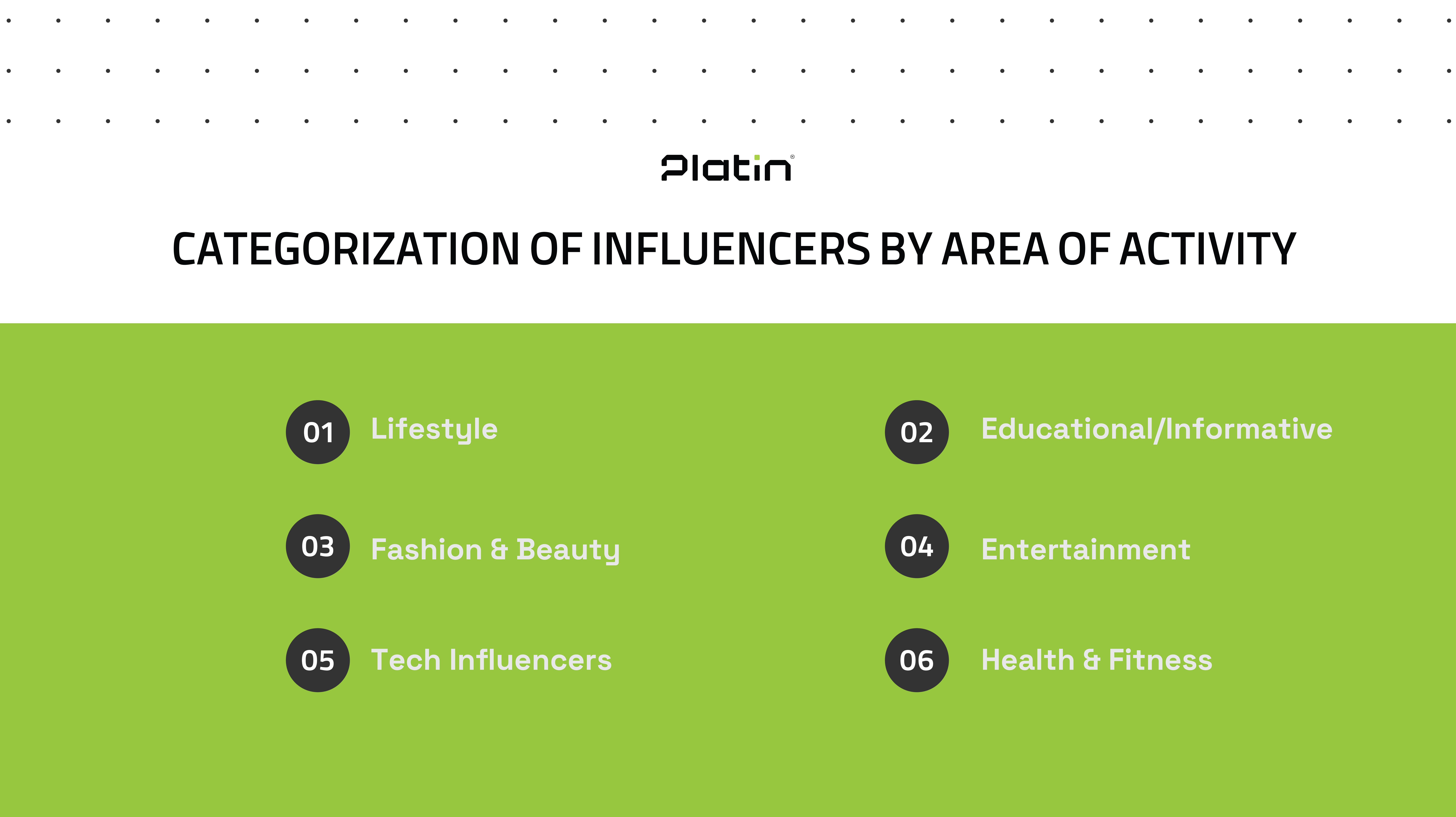
Influencer Categories Based on Content Focus
Unlike classifications based solely on follower count, content-based segmentation emphasizes relevance — what the influencer talks about and who their audience really is. Understanding these groups enables brands to communicate effectively with the right customers.
Below are the most prominent content-driven influencer categories:
1. Lifestyle Influencers

Lifestyle influencers cover a broad range of everyday topics including travel, cooking, home decor, self-care routines, and minimal living. Their content is typically relatable and emotionally engaging.
Key Traits: Diverse topics, relatable storytelling, emotion-driven content
Audience: General public seeking real-life inspiration
Real Example (Iran):
Mona Roshani — an Instagram influencer sharing her daily routines, travel experiences, and personal lifestyle moments.
Brand Recommendation:
Perfect for brands offering consumer goods, home & living, travel products, and anything integrated into daily life.
2. Beauty & Fashion Influencers
Focused on style, makeup, skincare, and fashion trends, these influencers play a major role in shaping trends and driving purchase decisions.

Key Traits: High-quality visuals, strong persuasion, trend-setting influence
Audience: Beauty lovers and fashion-conscious consumers
Real Example (Iran):
Niloufar Farahmand — well-known for reviewing beauty products and showcasing fashion styles.
Brand Recommendation:
One of the most powerful categories for product launches, brand awareness campaigns, and driving direct sales.
3. Tech Influencers
Technology influencers introduce audiences to new devices, apps, games, and digital innovations. Their followers rely on them for trusted recommendations.
Key Traits: Technical credibility, review-based content, problem-solving orientation
Audience: Tech fans, gamers, early adopters, purchase decision-makers
Real Example (Iran):
Amin Aramesh — a known tech reviewer comparing gadgets and presenting new technologies.
Brand Recommendation:
Perfect for brands whose products require explanation, demonstration, or expert approval.
4. Educational / Informative Influencers
These influencers specialize in sharing knowledge in categories such as language learning, psychology, business, personal development, or science.
Key Traits: Value-based and educational, often supported by expertise
Audience: Students, parents, professionals, and individuals focused on self-growth
Real Example (Iran):
Popular pages teaching English or soft skills through practical daily tutorials.
Brand Recommendation:
Highly effective for EdTech apps, books, online courses, financial advisors, and consulting services.
5. Entertainment Influencers
Entertainment influencers build an emotional bond through humor, creative skits, parodies, challenges, and pop-culture references. They usually generate very high engagement.
Key Traits: Creativity, humor, viral potential
Audience: General audience, especially younger generations
Real Examples (Iran):
Iz.Mohsen — comedic sketches and digital storytelling
Amir Soltanpour — parody videos and entertaining social content
Brand Recommendation:
Ideal for modern brands looking to create buzz, fast brand visibility, and emotional memorability.
6. Health & Fitness Influencers

Focused on sports, nutrition, mental well-being, and healthy lifestyles, these influencers inspire audiences toward better habits.
Key Traits: Motivational expertise, instructional content
Audience: Athletes, wellness-focused individuals, people pursuing healthier lifestyles
Real Example (Iran):
Raha Kamyab — fitness routines, nutritional insights, and motivational content.
Brand Recommendation:
Perfect for sports brands, supplement companies, wellness programs, and mental-health platforms.
How to Select the Right Influencer for Your Brand
Smart influencer selection requires clarity on three essentials:
- Campaign objective
(Brand awareness? Sales boost? App installs? Audience growth?) - Audience persona
(Age, gender, location, interests, lifestyle) - Budget and expected ROI
(Nano and micro influencers are often more cost-effective)
Example:
A youth-oriented brand in Tehran may perform better with local micro-creators than with broad national celebrities.
How to Measure Influencer Performance
Before finalizing collaboration, analyze:
- Engagement rate
- Audience authenticity (avoid fake followers)
- Content quality and narrative alignment
- Previous campaign success
- Audience geography and relevance
Professional tools such as Ninjalitics, HypeAuditor, and SocialBlade help ensure data accuracy.
Influencers: The Voice of Your Brand Story
In a crowded digital landscape, the key to a successful campaign lies in strategic alignment — choosing influencers who understand and carry your message with authenticity.
Influencers are not just media outlets.
They are the voice behind your brand’s story.
Selecting the right one defines whether your message will truly be heard and by whom.
FAQs
1. How can we identify fake followers or unrealistic engagement?
By using analytics platforms such as Ninjalitics, HypeAuditor, and SocialBlade to detect abnormal growth, fake accounts, and unnatural engagement trends.
2. Which influencer type is most suitable for local or small businesses?
Nano influencers, since they provide precise audience targeting, affordable collaboration, and higher engagement rates in local communities.
3. What is the difference between follower-based and content-based influencer classification?
Follower-based segmentation focuses on scale.
Content-based segmentation emphasizes relevance, expertise, and alignment with brand values, resulting in more impactful collaborations.
4. Why is audience persona and budget important when selecting influencers?
Persona ensures the message reaches the right people.
Budget influences the scale of exposure and the number of collaborations possible. Micro and nano influencers often deliver the best return on investment with limited spending.
