

 Case Studies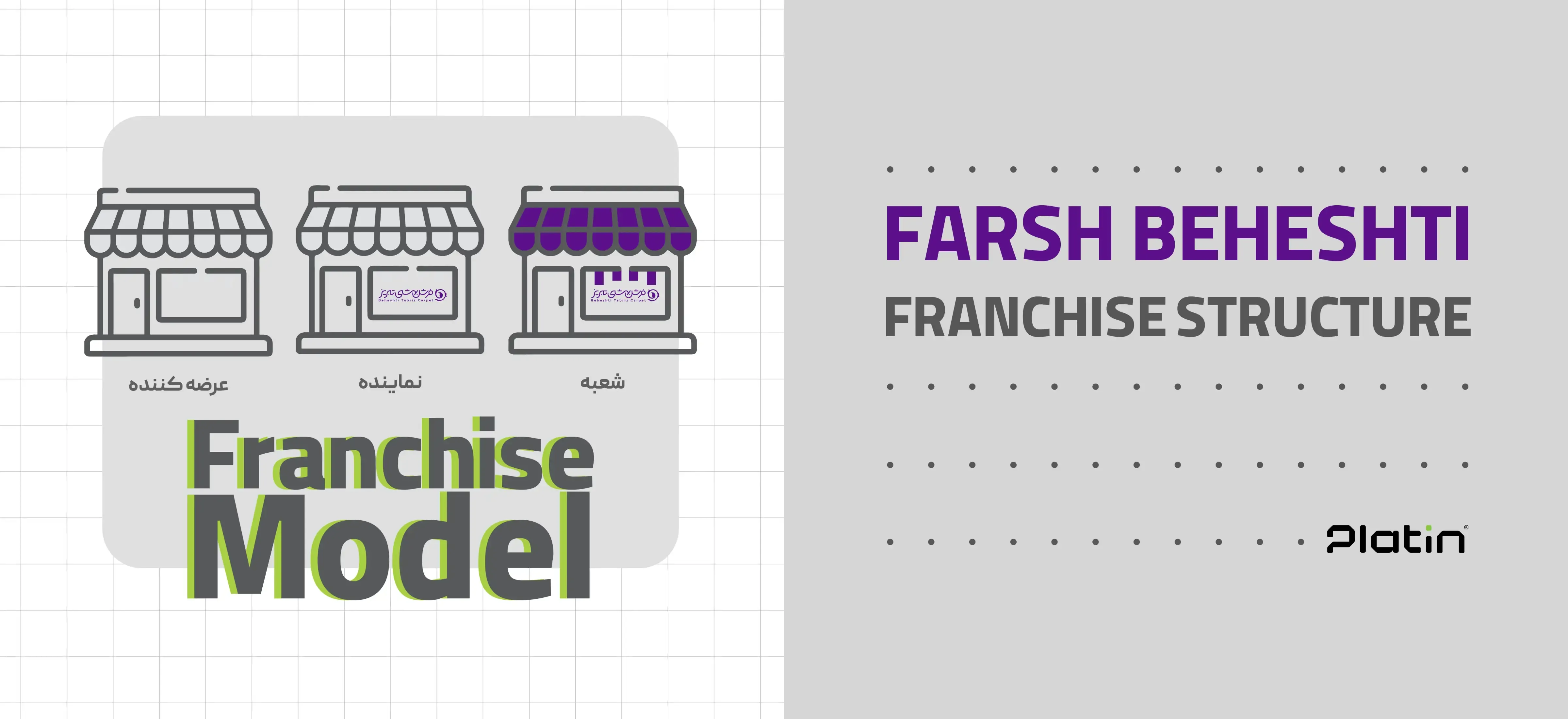
Beheshti Carpet, one of the most reputable brands in Iran’s carpet industry, faced a critical challenge during its expansion journey: growing sales channels without incurring the heavy costs of opening and managing new physical branches.
Launching physical stores across different regions was becoming less viable due to high costs such as rent, space setup, and human resource management.
At this point, Platinum Agency stepped in as a strategic partner to design and develop a standardized franchise (dealership) structure that would allow for rapid, low-cost network expansion. This structure not only enabled the brand to extend its reach but also ensured consistent brand image and quality through clear operational and financial guidelines.

Establishing a new physical branch required significant investment — from leasing and outfitting the space to hiring and managing staff. These costs made fast, large-scale growth almost impossible.
Directly managing multiple branches across various cities required complex infrastructure and large teams. HR issues, staff training, and day-to-day coordination placed a heavy burden on the central management team.
Each branch operated under the Beheshti Carpet name, meaning any service failure could harm the brand’s reputation. Without a standardized monitoring system, customer experiences across branches risked becoming inconsistent.
Criteria | Direct Branch (Brand-Owned) | Dealership (Franchise) |
| Setup Costs | Very high (rent, full equipment, HR costs) | Lower, most costs borne by the franchisee |
| HR Management | Fully managed by the brand | Managed by the franchisee under brand supervision |
| Growth Speed | Slow and limited | Faster, enabling expansion across multiple cities |
| Brand Risk | Low (full control by the brand) | Medium (requires strict standards and monitoring) |
| Profitability for Brand | Direct but costly | Indirect, with lower fixed costs |
| Marketing Flexibility | Limited to brand policies | Within brand framework, but with franchisee involvement |
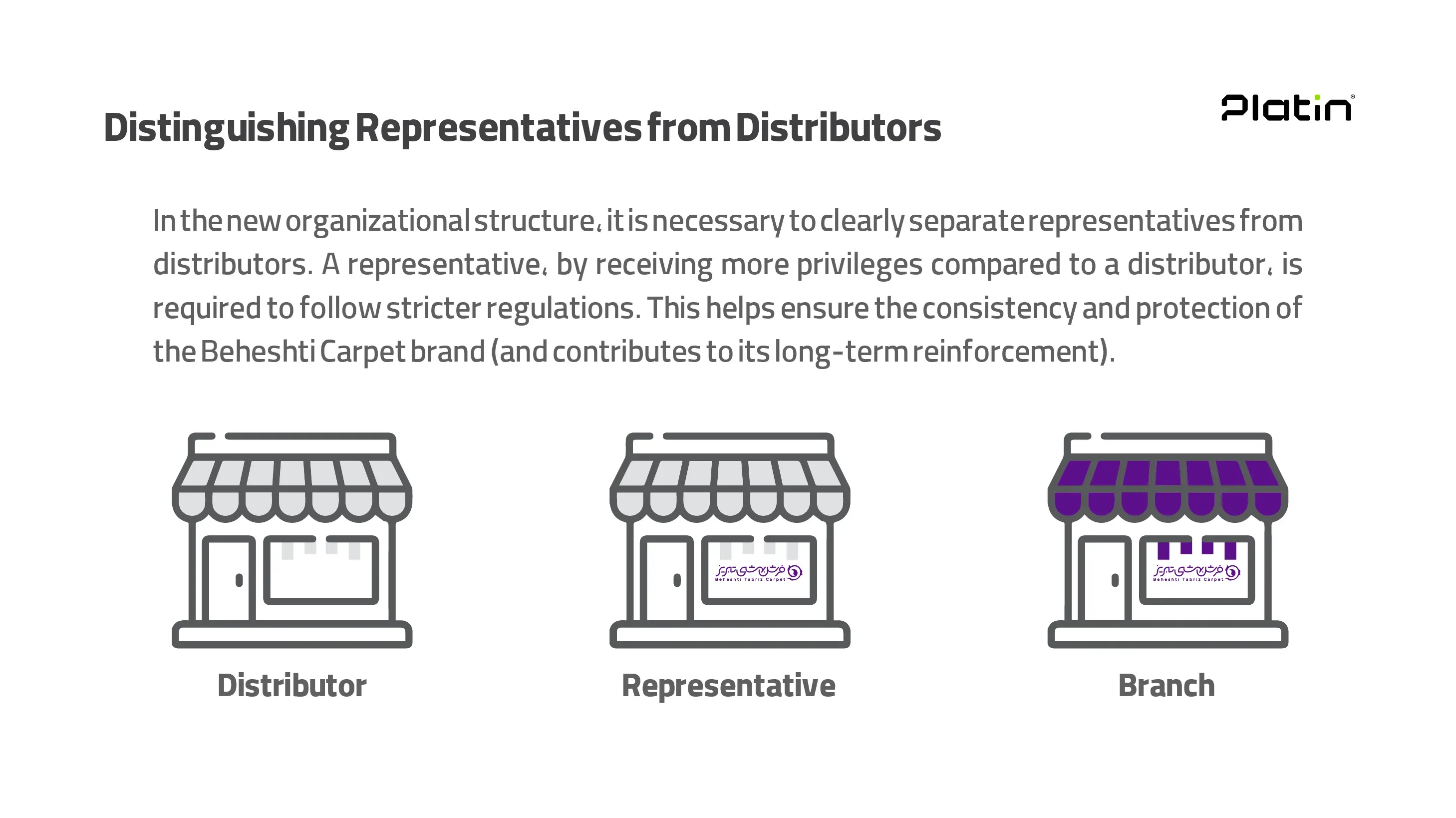
Platinum designed a three-tier collaboration model to help Beheshti Carpet expand its sales channels effectively:
Collaboration Type | Ownership | Training Responsibility | Financial Model | Marketing Freedom |
| Brand-Owned Branch | Brand | Fully by the brand | Full funding by the brand, no initial buy-in | Limited to brand policies |
| Franchise (Dealership) | Independent franchisee | Initial training by brand, execution by franchisee | Purchase from brand + defined profit margin | Under brand supervision |
| Retailer | Independent retailer | No obligation by brand | Direct purchase with negotiated margin | Almost free, but within brand guidelines |
After analyzing factory production costs and market dynamics, Platinum developed a fair profit-sharing model:
This approach enabled network expansion with minimal fixed costs and maximum financial synergy.
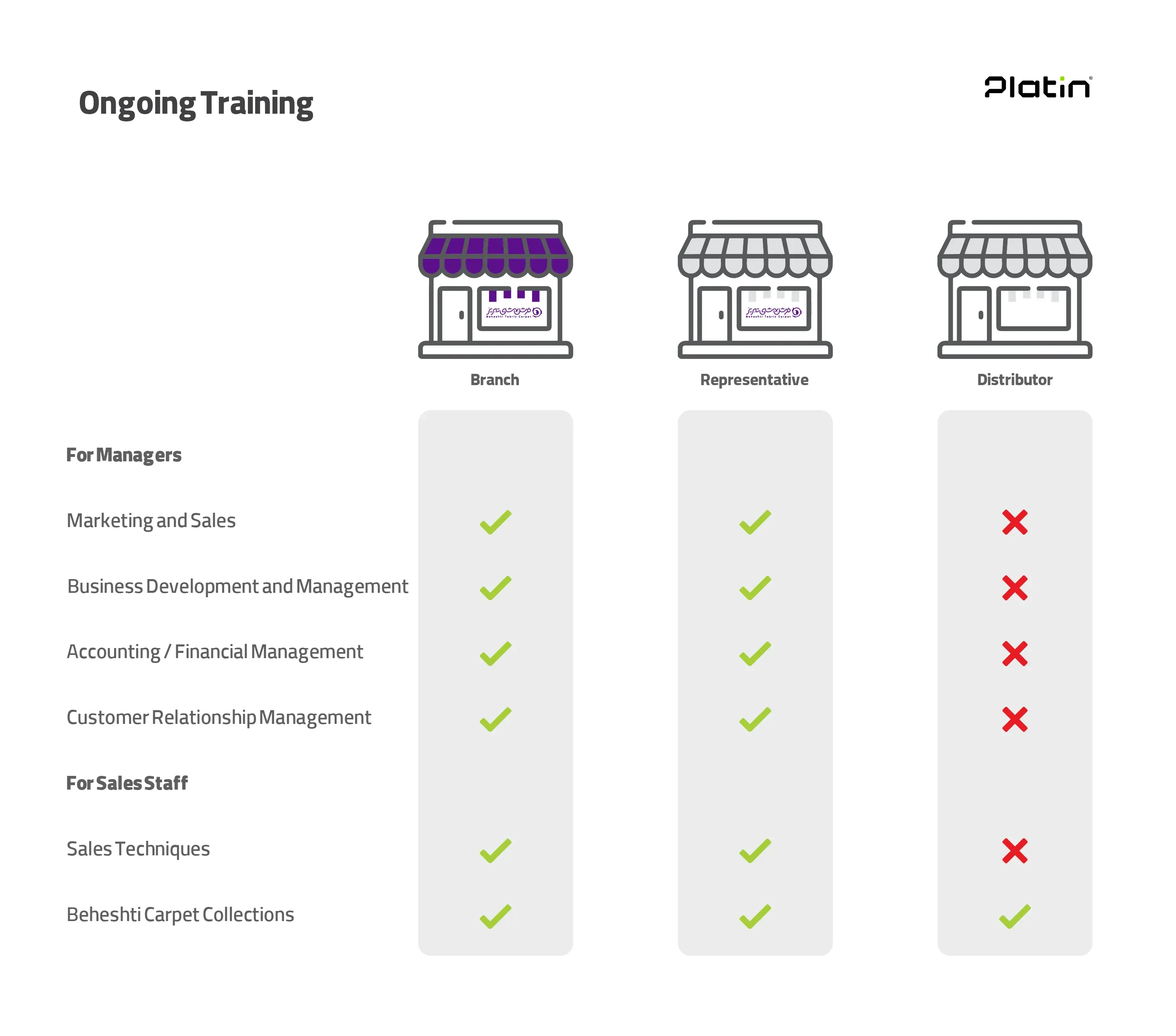
Maintaining consistent customer experience was a top priority. Platinum created a continuous training system:
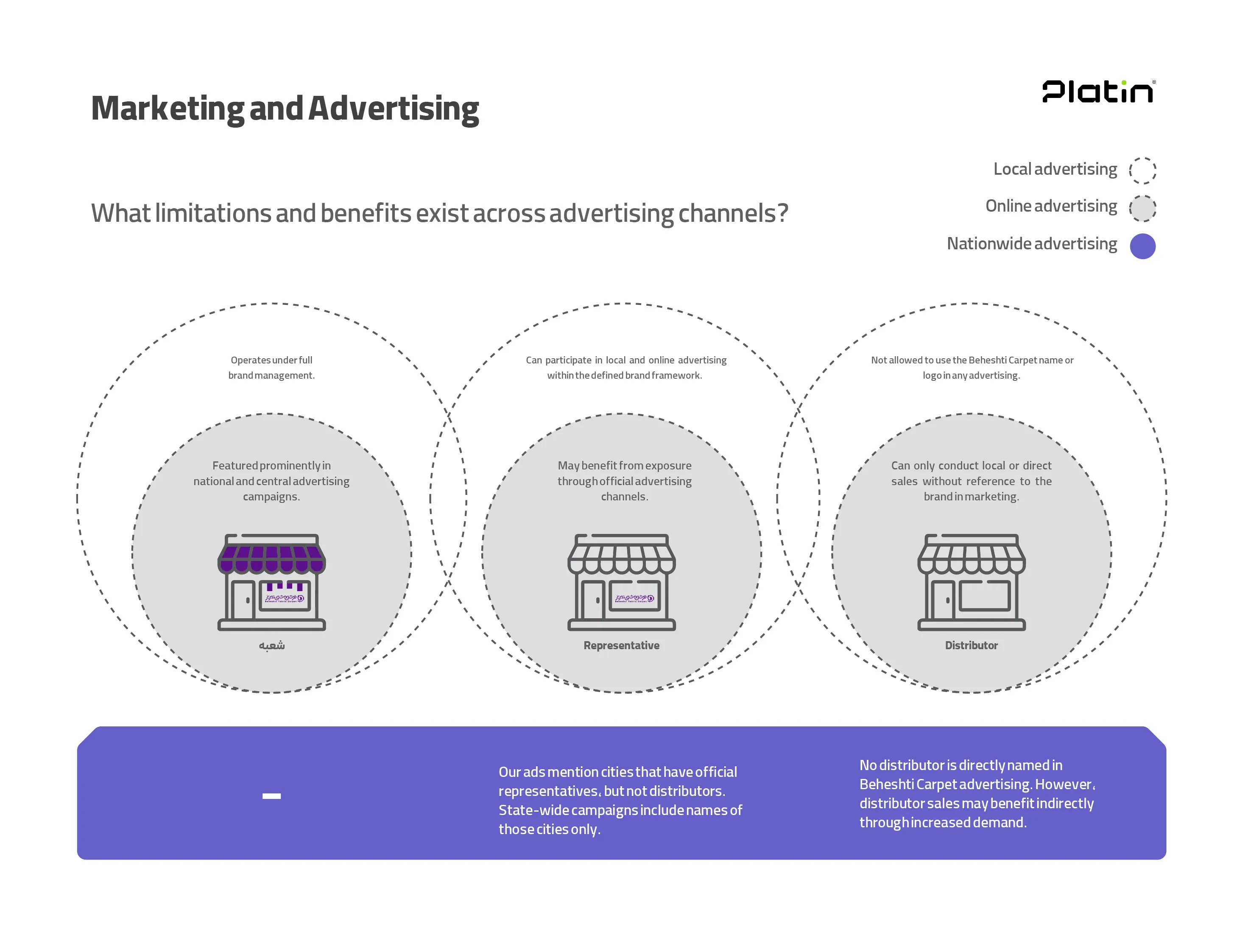
To prevent harm to brand image, Platinum established clear advertising policies:
Platinum designed a monitoring and scoring framework executed on a monthly and quarterly basis:
Within just 18 months, Beheshti Carpet achieved impressive milestones through the franchise model designed by Platinum:
The brand expanded its sales network by opening 30 active dealerships in various cities across the country.
In addition to the dealerships, three new brand-owned branches were established to serve as central hubs and reference points for other dealerships.
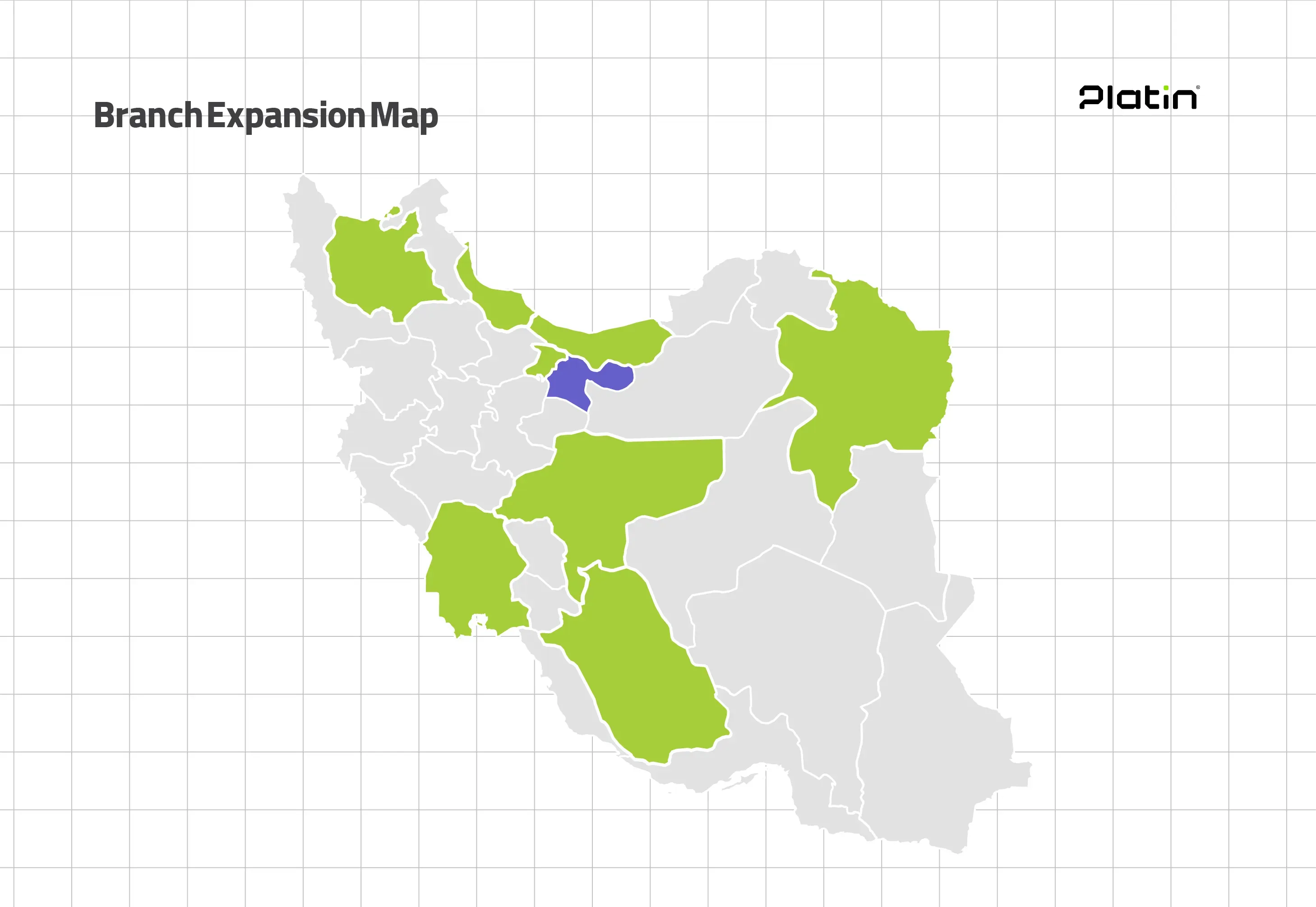
Thanks to this model, Beheshti Carpet increased sales without a dramatic increase in fixed costs such as rent, equipment, or direct HR expenses.
The design and implementation of the franchise model marked a turning point in Beheshti Carpet’s growth journey.
Platinum successfully developed operational, financial, and monitoring frameworks that ensured mutual benefit for both the brand and its franchisees.
The result was sustainable sales growth and a rapidly expanding distribution network, achieved without the heavy financial burden typically associated with large-scale physical expansion.
This case study demonstrates how strategic structuring and standardization can empower brands to scale efficiently while maintaining quality and brand integrity.
