Market Analysis: What It Is and Why It’s Crucial for Brands
In today’s highly competitive world, running a business based solely on assumptions and experience is no longer enough. The market evolves daily, customer preferences shift, and competitors constantly introduce new strategies. In such an environment, making decisions without accurate data significantly increases the risk of errors and failure.
This is where Market Analysis becomes essential. Simply put, market analysis is the process of collecting and analyzing real data to gain a better understanding of current and future market conditions. It helps businesses determine the market size, identify emerging trends, analyze key competitors, and define their brand’s positioning.
The connection between Market Analysis and Branding is direct and vital. Branding is about creating a lasting identity and perception in the minds of your audience. However, this image must align with market realities. Otherwise, even the most creative campaigns will fail. When a brand clearly understands customer desires and competitor strategies, it can develop smarter, more targeted, and more effective brand strategies.
Platin Agency’s Data-Driven Approach Platin Agency offers market analysis services with a fully data-driven approach. Instead of relying on guesses, the agency uses reliable domestic statistics and global trend research to help brands make informed decisions with lower risk and a higher chance of success.
Key Stages of Market Analysis
Market Analysis: What It Is and Why It’s Crucial for Brands In today’s highly competitive world, running a business based solely on assumptions and experience is no longer enough. The market evolves daily, customer preferences shift, and competitors constantly introduce new strategies. In such an environment, making decisions without accurate data significantly increases the risk of errors and failure.
This is where Market Analysis becomes essential. Simply put, market analysis is the process of collecting and analyzing real data to gain a better understanding of current and future market conditions. It helps businesses determine the market size, identify emerging trends, analyze key competitors, and define their brand’s positioning.
The connection between Market Analysis and Branding is direct and vital. Branding is about creating a lasting identity and perception in the minds of your audience. However, this image must align with market realities. Otherwise, even the most creative campaigns will fail. When a brand clearly understands customer desires and competitor strategies, it can develop smarter, more targeted, and more effective brand strategies.
Platin Agency’s Data-Driven Approach Platin Agency offers market analysis services with a fully data-driven approach. Instead of relying on guesses, the agency uses reliable domestic statistics and global trend research to help brands make informed decisions with lower risk and a higher chance of success.
Key Stages of Market Analysis
Stage 1 – Defining the Research Objective Every market analysis begins with one critical step: setting a clear objective. Without a well-defined goal, collected data will remain scattered and unhelpful, failing to guide strategic decision-making. Your research objective should be specific and precise. For example:
Designing a Brand Strategy to secure a strong position in the customer’s mind.
Developing a Go-To-Market Strategy to launch a new product or service and assess its market potential.
Identifying a Competitive Advantage to stand out among numerous competitors.
The Role of KPIs (Key Performance Indicators): KPIs act as a compass to measure progress. They differ depending on industry and business size. For instance, a 15-person startup introducing a new product should not compare itself with a multinational corporation of 500+ employees. Instead, it should track metrics like:
Number of early adopters
Speed to market
Initial customer reactions
This ensures focus on realistic targets and avoids misleading comparisons. Properly defining KPIs sets a strong foundation for all subsequent steps, such as competitor analysis and brand positioning.
Stage 2 – Identifying Trends and Analyzing KPIs Once objectives are clear, the next step is identifying Market Trends and defining Key Performance Indicators (KPIs). These act as guiding lights, showing the brand’s current standing and predicting future market direction.
Why Market Trends Matter Markets are dynamic. Customer behavior, technology, and regulations can dramatically reshape an industry. Brands that fail to anticipate changes risk falling behind. Market trend analysis answers key questions like:
Which products will have high demand in the future?
What features or values will customers prioritize?
What factors could drive market growth or decline?
Example: In the food and beverage industry, there’s been a strong shift toward healthier products. While sugary drinks were once highly popular, today’s successful brands focus on low-sugar or sugar-free alternatives. Ignoring such trends could render marketing efforts ineffective, no matter how strong they seem.
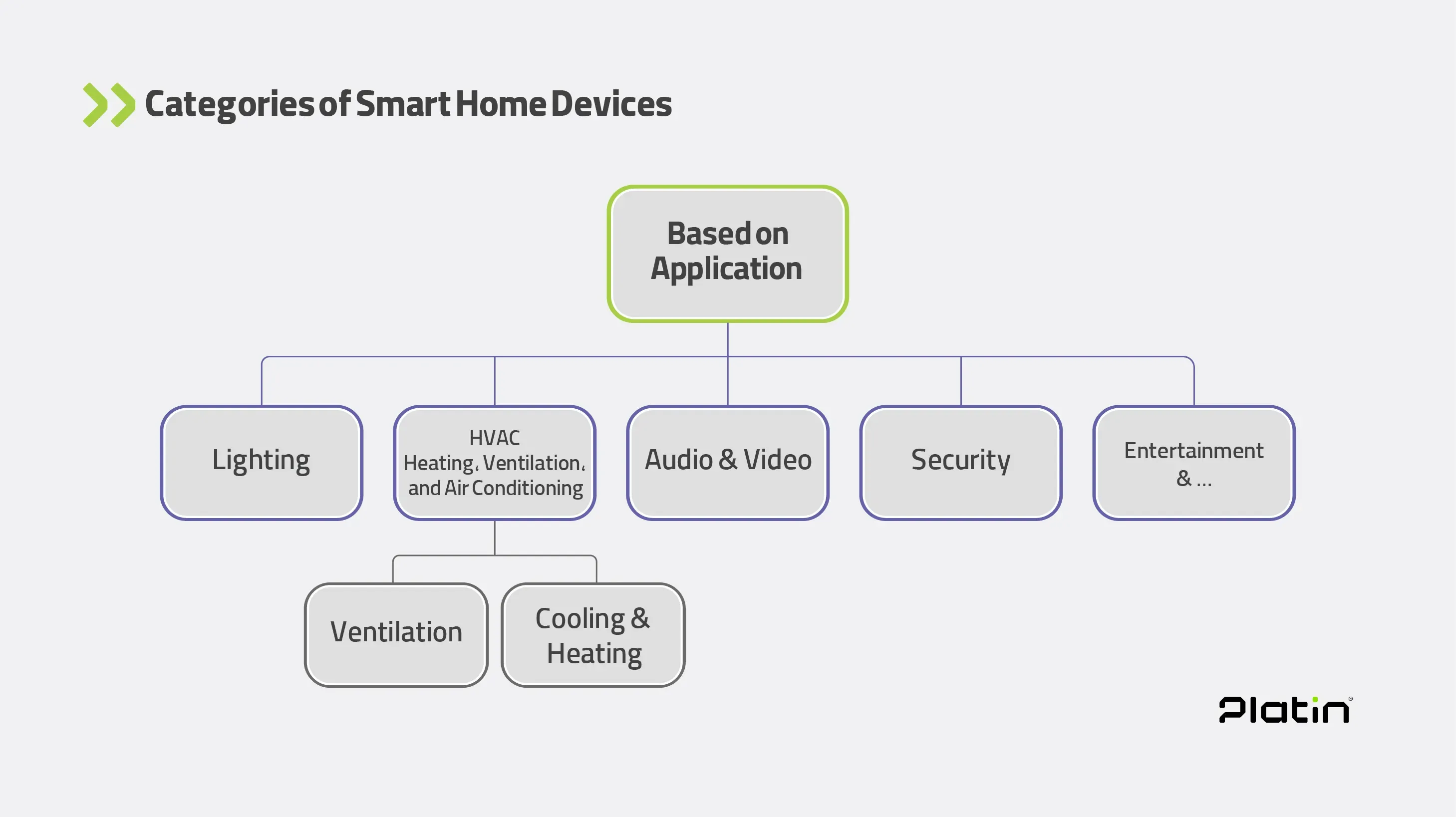
An example of categorizing types of smart home devices:Example KPIs Across Industries When conducting market analysis, one of the most crucial steps is selecting and defining KPIs tailored to each industry. These indicators show whether a brand is on the right track. Importantly, KPIs must match the business’s scale and goals; what works for a multinational may not suit a startup.
For clarity, here are some examples:
Industry
Key KPIs
Example Trend Shifts
Food & Beverage
Sugar & salt content in products
Shift toward healthier, low-sugar items
E-commerce
Delivery speed & quality
Same-day or under-24-hour delivery
Manufacturing
Production cost & capacity
Reducing material costs & boosting efficiency
These examples illustrate that KPIs must be tailored to each industry and brand objective to minimize risks and guide branding efforts effectively.
Stage 3 – Benchmarking Successful Global Examples Benchmarking involves studying successful brands in your industry, both nationally and globally, to learn from their strategies. However, direct comparison with massive corporations like Apple or Coca-Cola can be misleading due to scale differences.
Example: A 15-person tech startup should not compare itself directly with a giant like Samsung. Instead, it should analyze similarly sized brands with accessible growth paths. Benchmarking focuses on factors like:
Pricing models
Marketing and advertising strategies
Product or service diversity
Organizational structures
The goal isn’t to copy but to adapt strategies to your brand’s unique context and local market.
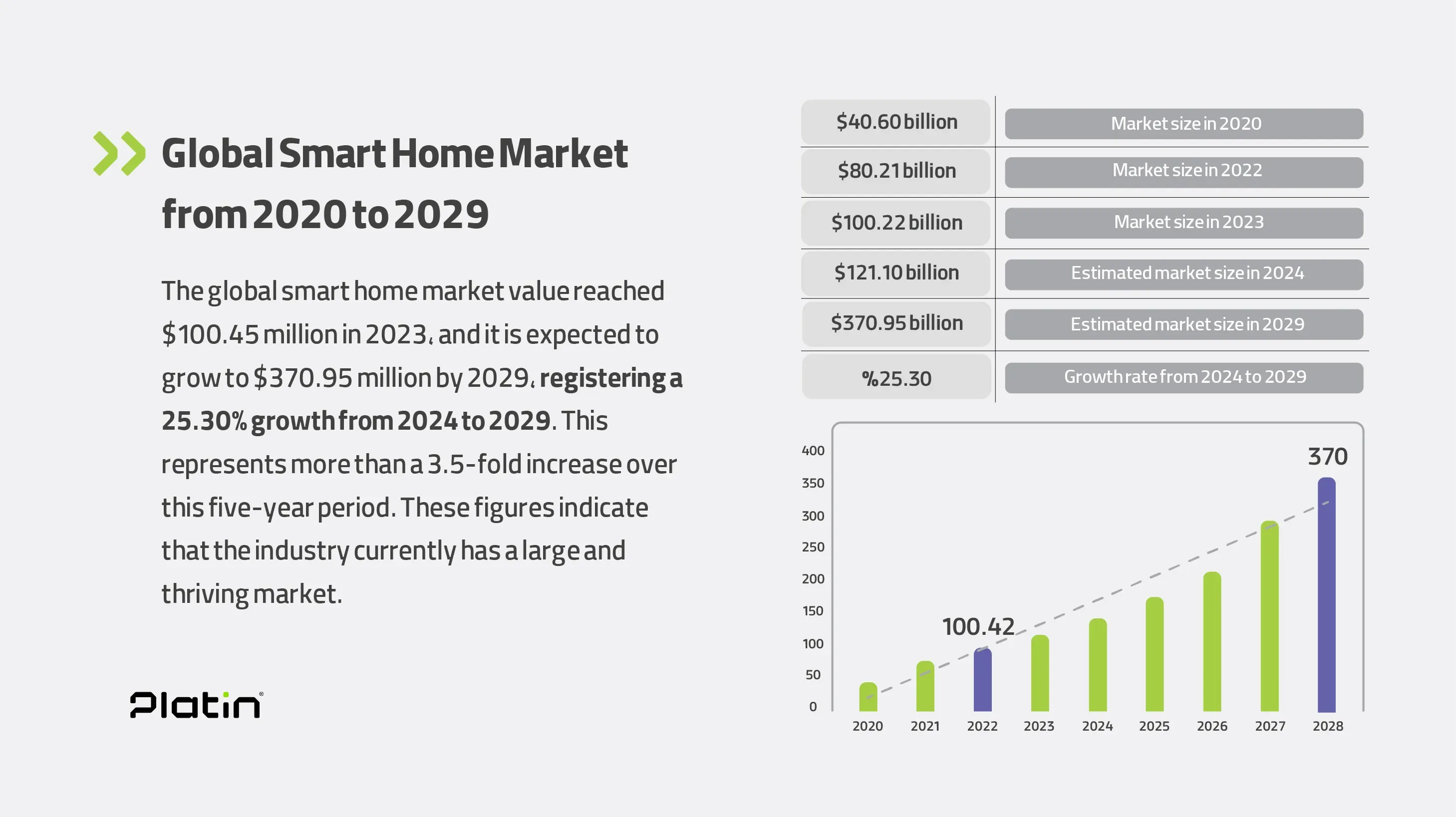
For example:Stage 4 – Analyzing Local Market Data (Iran-Specific Example) Global trends are valuable, but local realities must shape the final strategy. In this stage, brands gather domestic market data to understand real conditions.
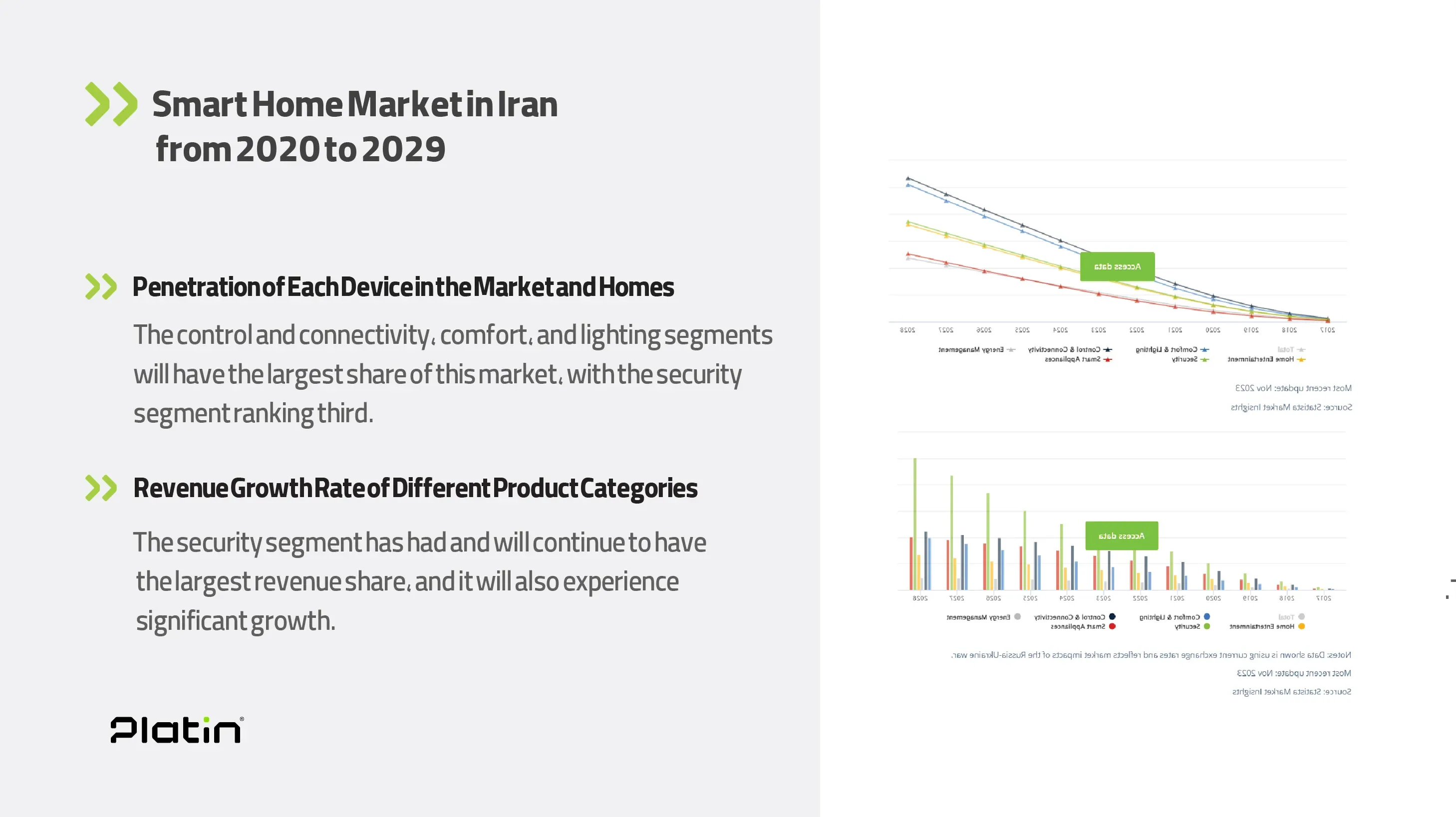
For example:Key Local Data Sources (Market Size) To accurately assess market size and competition, use official and reliable domestic sources. The most important include:
Chamber of Commerce: Import/export statistics
Guild Associations: Number of stores, supply and demand data
Parliamentary Research Center & research institutes: Official reports, macro analyses, and industry-related laws
These insights reveal whether a market is growing, saturated, or declining, helping brands avoid costly mistakes.
For example, in many food industries, simply analyzing import statistics (including legal and illegal goods) can reveal overall market trends. A rise in imports signals increased demand; a drop or shift in consumption patterns may warn of market contraction or changing customer tastes.
Local Data Sources and Their Use in Market Analysis
Data Source
Type of Information Provided
Use in Market Analysis
Chamber of Commerce
Import/export statistics
Estimate market size and identify capacity
Guild Associations
Sales and distribution network data
Analyze access levels and market saturation
Parliamentary Research Center & research institutes
Economic reports and trade laws
Assess regulations impacting branding
Legal/illegal import data
Real volume of goods entering the market
Detect hidden trends and true demand
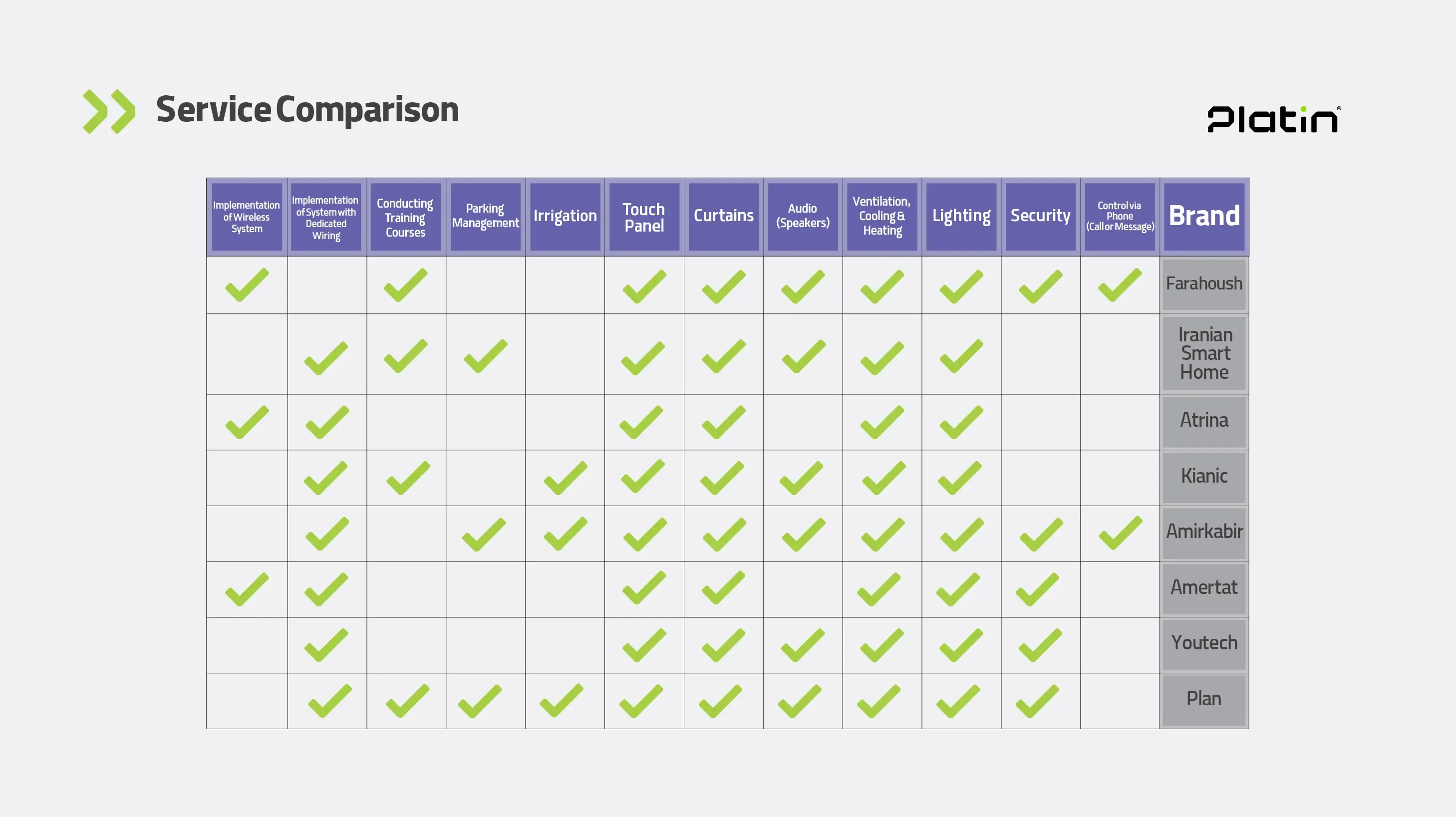
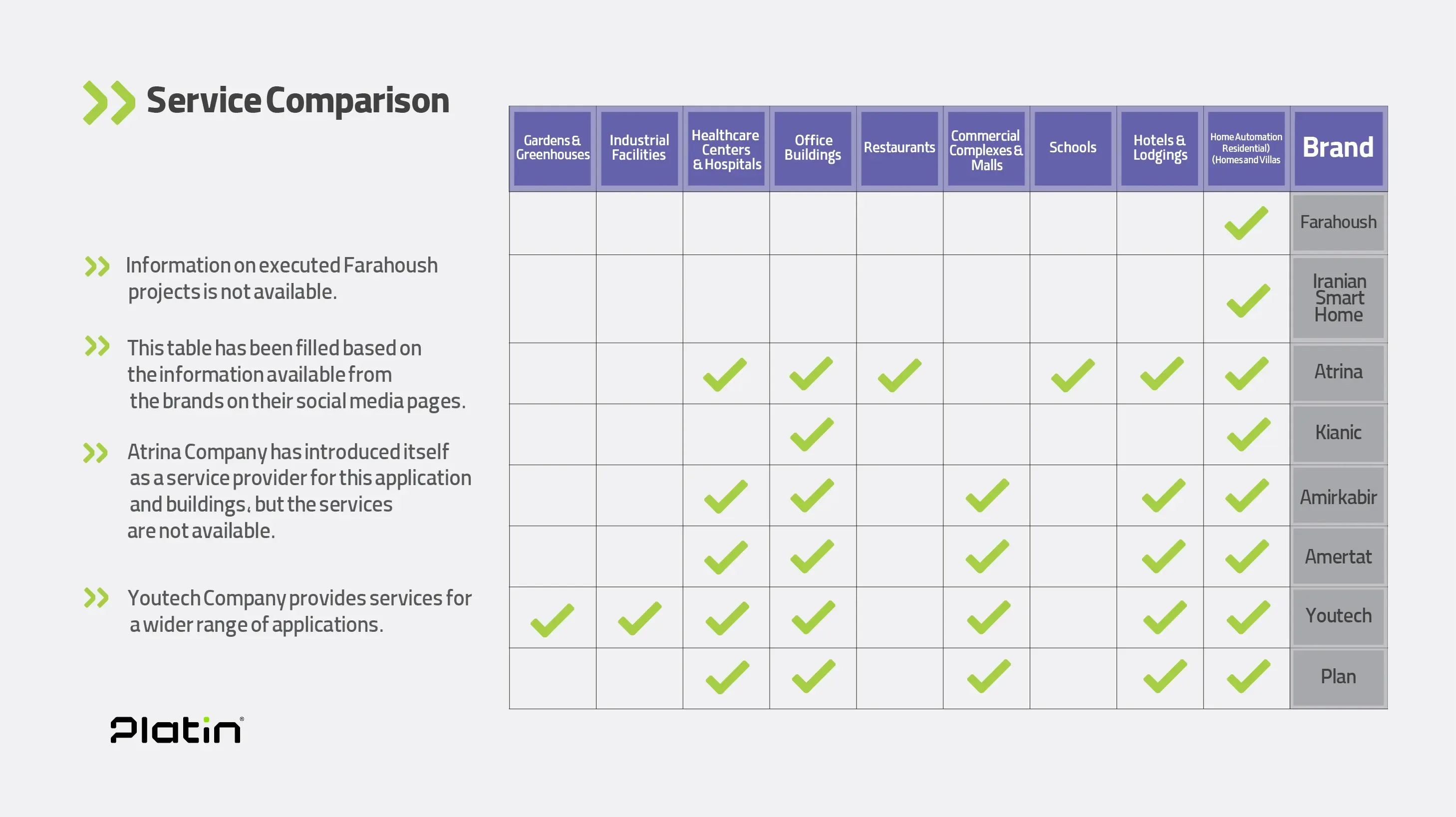
An example of comparing the services of brands active in the smart home market: Stage 5 – Competitor and Market Player Analysis No brand operates in isolation. Understanding competitors and indirect market players is crucial.
Competitor vs. Market Player:
Competitor: Offers the same product/service and directly competes for your customers.
Market Player: Offers different products/services but still influences customer choices indirectly.
Example: A juice company competes directly with other juice brands. However, soda brands, while in a different category, act as substitutes and must also be considered in the analysis.
Competitor analysis includes:
Pricing strategies
Marketing channels
Product portfolio
Strengths and weaknesses in customer experience
This step helps identify gaps, opportunities, and ways to differentiate your brand.
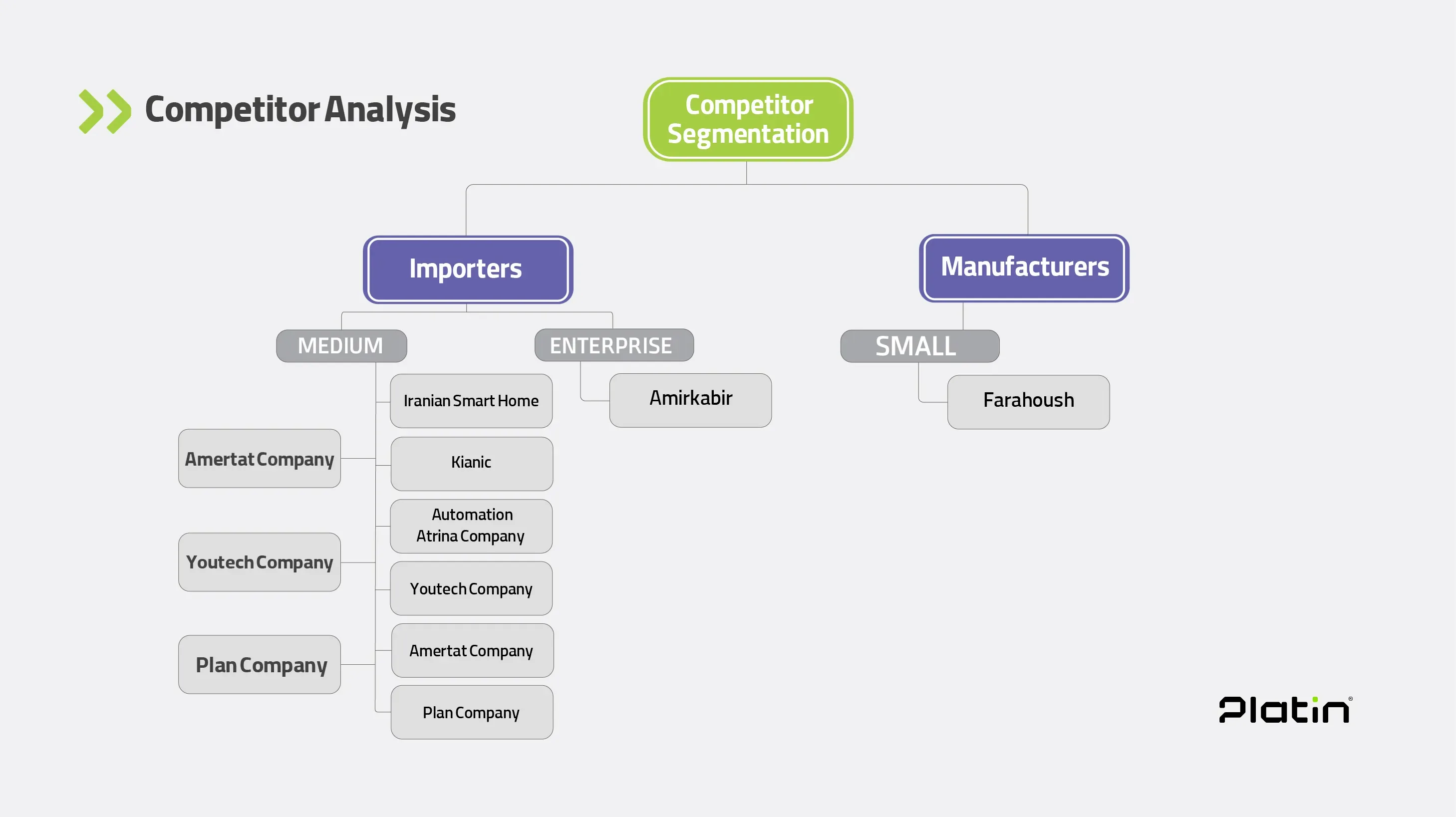
An example of competitor analysis in the smart home market:Stage 6 – Brand Positioning Analysis The final step brings all the gathered data together to define your Brand Positioning. This involves determining:
Current Positioning: Where customers perceive your brand today.
Desired Positioning: Where you want to be in the future.
Tools like Perceptual Maps visually compare your brand and competitors across dimensions such as price vs. quality or innovation vs. accessibility.
If your current position aligns with customer expectations, maintaining the status quo may be best. Otherwise, a Repositioning Strategy is necessary to shift perceptions and reach your desired market standing.
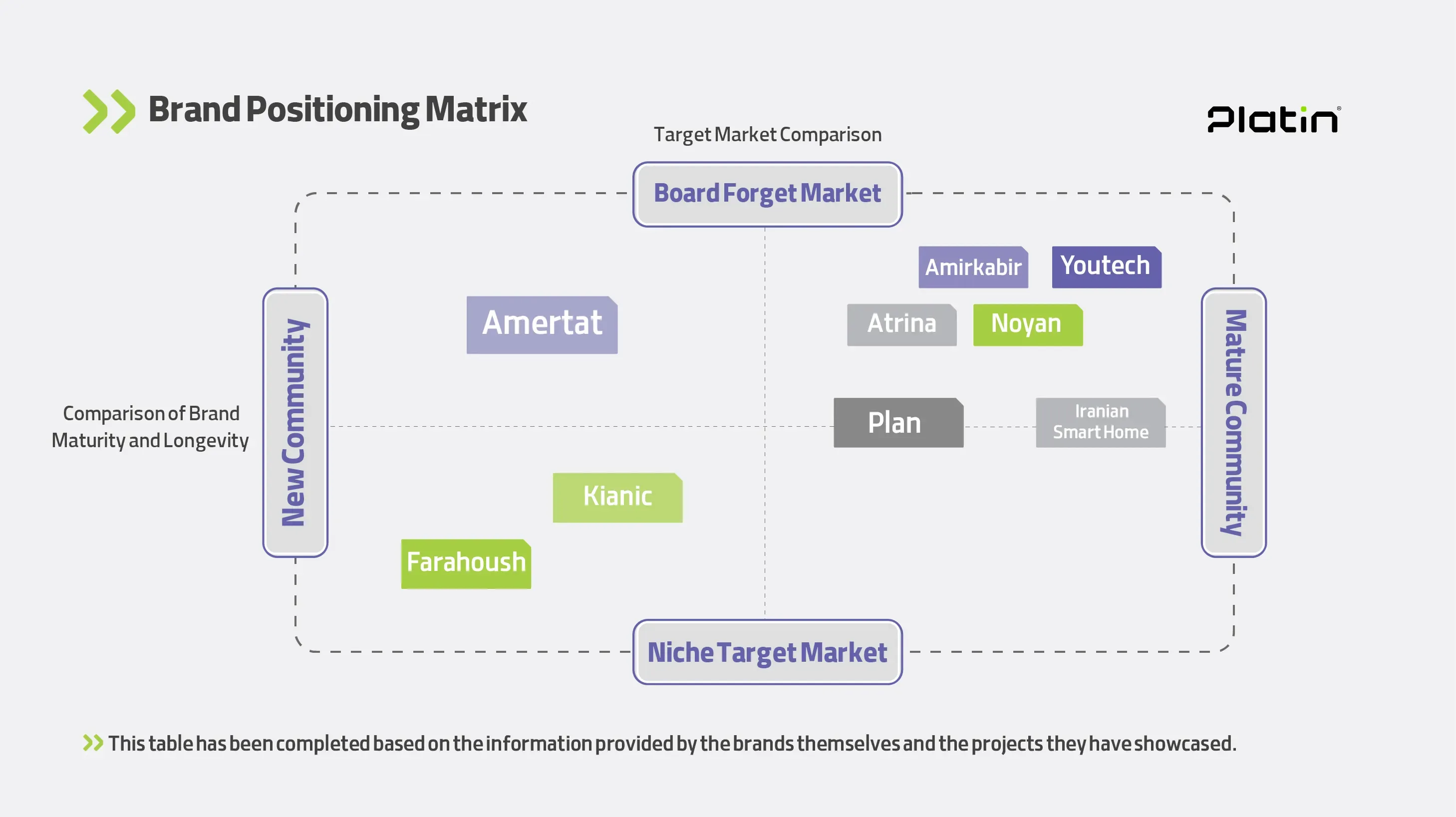
An example of a brand positioning matrix in the smart home market: In essence, this stage is like a map showing exactly where you are, where your competitors stand, and what route you need to take to reach your desired destination.
Conclusion Market Analysis is far more than simple research. It’s a powerful tool for making informed decisions and reducing business risks. Brands that understand their market direction, key trends, and competitor landscape are better equipped to:
Enter new markets
Launch products successfully
Strengthen their branding strategies
Platin Agency’s Role: Platin acts as a trusted partner by combining:
Reliable domestic data (e.g., Chamber of Commerce, guild statistics, research centers)
Analysis of both local and global market trends
Definition and measurement of tailored KPIs
Benchmarking with comparable successful brands
This process delivers a practical roadmap that shows:
Your brand’s current position
Opportunities and threats ahead
Clear actions to achieve your desired outcomes
In essence, market analysis bridges the gap between guesswork-driven decisions and scientific, effective brand strategies, making it a vital service for every brand regardless of size or industry.
For a free consultation, call +98 912 027 9854 or write your number in the form below so our consultants can contact you as soon as possible.
powered by platin
Market Research & Competitor Analysis Services: Identifying market opportunities